To potty train a Caucasian Shepherd Dog puppy, give them frequent chances to use one practical outdoor place, reward success immediately, and supervise the time between trips. The household controls access and opportunity while the puppy learns. Consistency matters more than expecting an independent, slow-maturing puppy to announce every need clearly and consistently.
House training becomes clearer when you treat it as a route through the day. Waking, eating, drinking, playing, and changing rooms all prompt an outdoor opportunity. This guide walks that route from setup to reward, turns accidents into scheduling clues, and shows how to expand freedom without relying on unsupported age promises or a generic household clock.
Caucasian Shepherd Dog Potty Training Starts With One Route
Choose the exit before the puppy needs it. The path should be direct, easy to clear, and usable in ordinary weather. Store the leash and rewards where an adult can reach them without searching. A smooth departure gives the puppy less time to wander, play, or eliminate on the way.
Pick one outdoor destination that is safe and practical. Humane World's potty training guidance pairs a regular outdoor location with a leash and a cue spoken during elimination. Repetition helps the route and place predict the task.
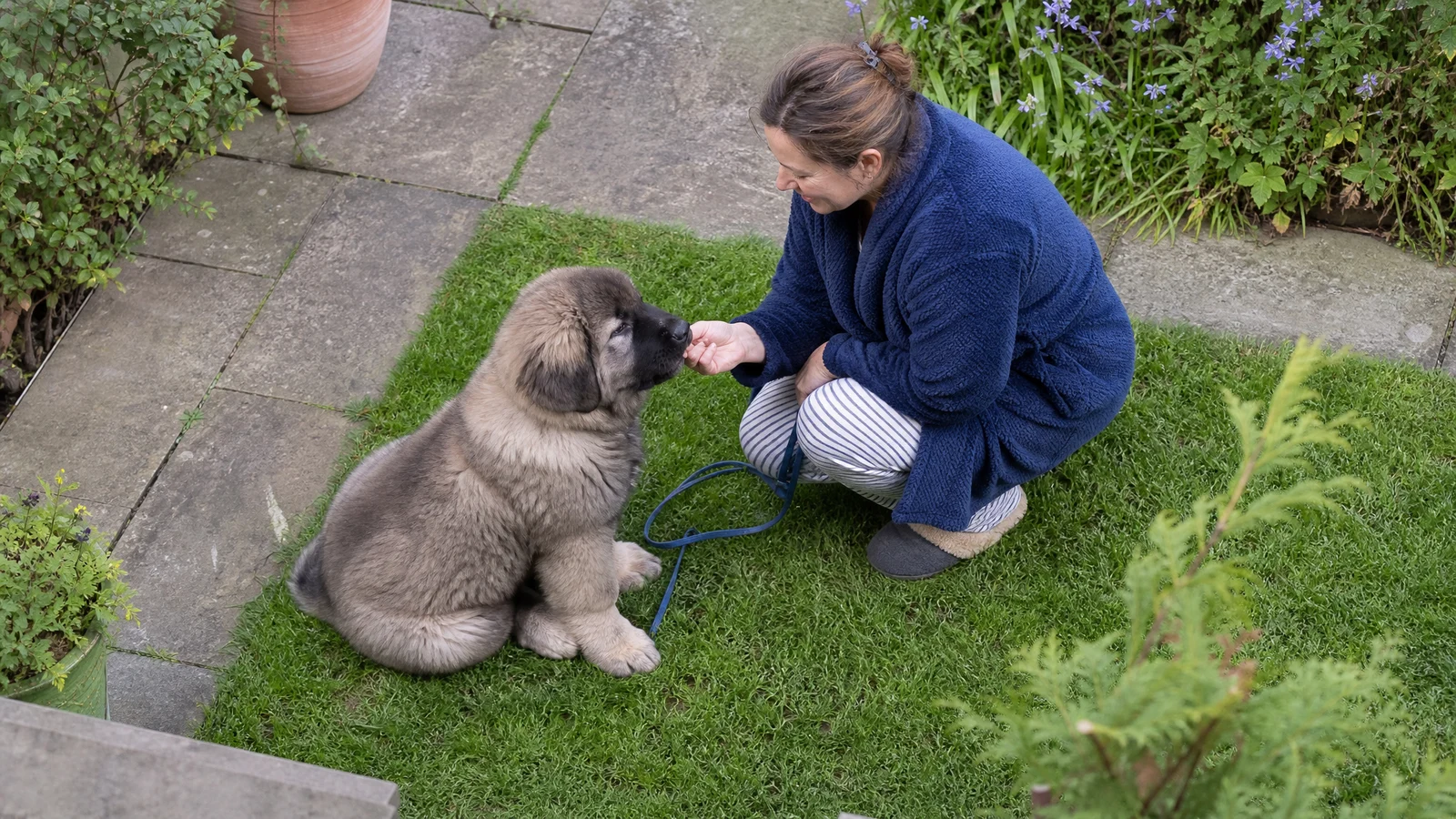
Walk the puppy to the spot rather than sending them into the yard alone. The leash keeps the trip purposeful, lets you observe what happened, and prevents a successful elimination from going unnoticed. Stand quietly enough that attention stays on the task.
Prepare the route as a household system. A shared plan keeps the puppy's opportunity consistent when caregivers change.
- Keep a leash by the chosen exit and check that the path is clear.
- Place small rewards in a closed container the puppy cannot reach.
- Agree on one short potty cue and one marker word.
- Decide who takes the puppy after each common transition.
Everyone should use the same destination and response. If one person turns the trip into play before elimination while another waits quietly, the puppy receives two different lessons about what the door predicts.
Caucasian Shepherd Dog Potty Training Uses Transitions
A rigid clock cannot account for every puppy, meal, drink, nap, or burst of play. Transitions are more reliable prompts because they follow events that change elimination needs. Take the puppy out after waking, after food or water, after active play, and before or after a change in confinement or room access.
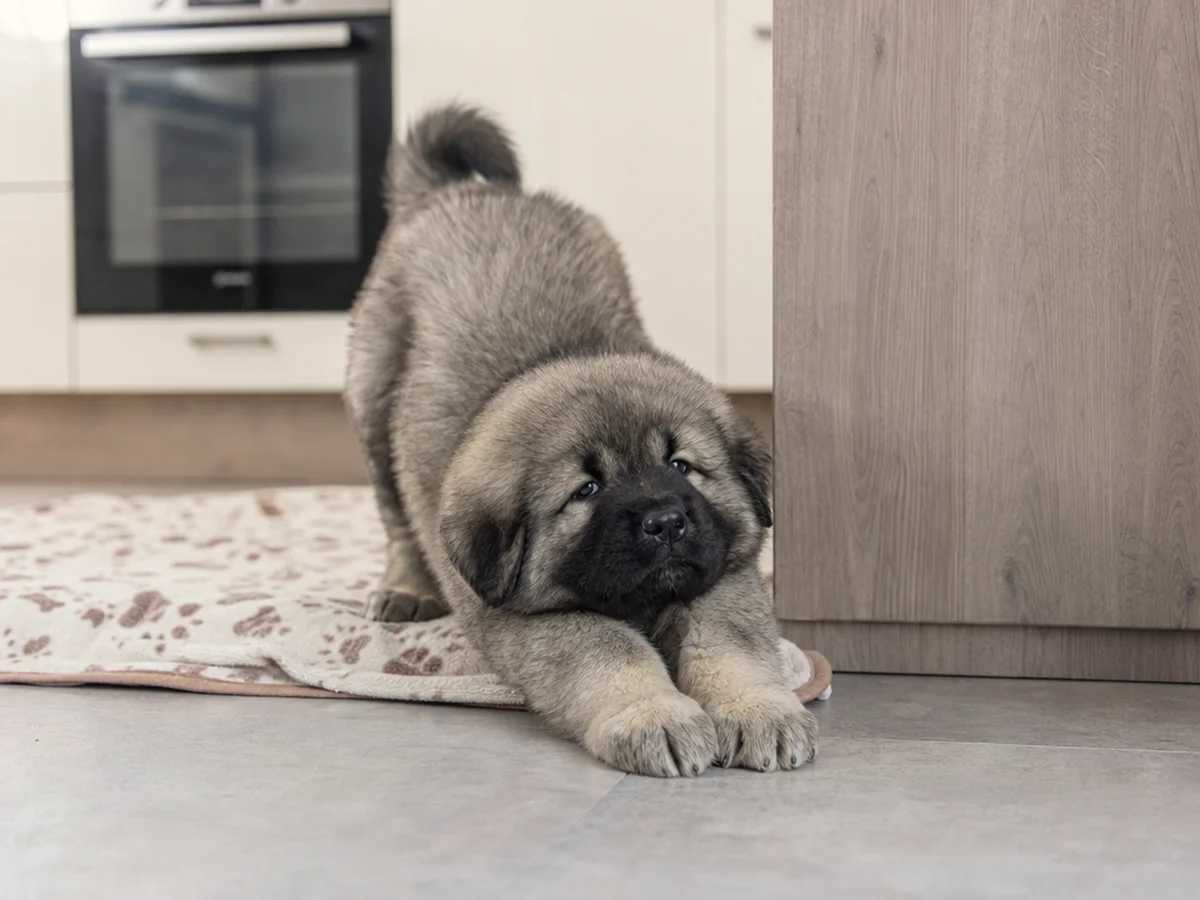
Watch the individual puppy between those events. Sudden sniffing, circling, leaving an activity, drifting away from the occupied area, or becoming restless can mean the opportunity is due. Respond by beginning the familiar route instead of waiting for a stronger signal.
Young puppies need more opportunities than adults because physical control is still developing. Battersea's toilet training advice also notes that setbacks are normal. Treat a miss as evidence that the previous interval, supervision level, or transition plan did not fit that moment.
Use the Potty Log to Adjust
Keep a simple log of events rather than promises. Record what happened before the trip, whether the puppy eliminated, and where a miss occurred. Patterns such as an accident after vigorous play or soon after drinking help you move the next opportunity earlier.
The breed's eventual size makes early routines valuable. A familiar route, calm leash movement, and a clear destination are easier to establish while the puppy is small, but the method should remain patient. Size is a reason to prepare, not a reason to rush learning.
Outdoor Potty Training Rewards
Reward at the outdoor destination, not after returning indoors. The puppy needs the marker and reward connected to the act you wanted. Keep the food ready, say the cue quietly while elimination happens, mark as the puppy finishes, and deliver the reward promptly.
After the reward, offer a little safe sniffing or calm outdoor time when circumstances allow. If every success ends the outing instantly, a puppy who enjoys being outdoors may learn to delay. Letting the task unlock a small amount of exploration makes prompt elimination useful to the puppy as well as the household.
Pair the Potty Cue With the Act
The reward-based approach works because a valued outcome makes a behavior more likely to occur again. Choose a reward the puppy actually wants in that environment. Quiet praise may support the moment, but it should not replace food if food produces clearer learning.
Do not distract the puppy with repeated talking while they search for a spot. Give the cue once, then wait. When the trip produces nothing, go back inside and keep the puppy within active view. Offer another calm opportunity after the reset rather than extending the outing until it loses purpose.
Rewarding outdoors also confirms the event for the person keeping the log. Everyone knows the trip succeeded, so the next transition can be planned from real information. That shared feedback is especially useful when several adults divide puppy care.
A cue becomes useful only after many pairings with the act. It is not a command that can make an empty bladder produce a result. Use it to help the puppy recognize the familiar context, then let the body determine whether elimination occurs.
Potty Supervision Between Outdoor Trips
Active supervision means someone is watching the puppy closely enough to notice a change and begin the route. Being in the same house is not enough if attention is on a screen, meal, or conversation. Keep the puppy in the occupied room and limit access to hidden corners.
Use gates, closed doors, a supervised leash, or a comfortable rest area to make the space match your attention. These tools prevent wandering and help the puppy rehearse calm household behavior. They should not replace outdoor opportunities or become a response to an accident.
Crate use requires separate comfort training and appropriate timing. A puppy who is worried or physically unable to wait does not learn house training by remaining confined. Our guide to Caucasian Shepherd crate training builds voluntary rest before adding distance or absence.
When the puppy is awake and active, assume the next transition may arrive quickly. Move outside after a play session ends, after the puppy drinks, or when they disengage from chewing. Prompt action is easier than interrupting a behavior already underway.
During calm rest, preserve sleep rather than waking the puppy merely to satisfy a chart. Be prepared to go out when they wake. The route should begin before greetings, play, or a tour of the room changes the puppy's priorities.
Potty Accidents Become Schedule Clues
An accident does not show that the puppy is spiteful, dominant, or untrainable. It shows that the opportunity, observation, or environment failed at that point. Respond quietly, clean the area thoroughly, and change the plan around the event that came before it.
When You Notice an Accident in Progress
Use a neutral interruption if it helps you guide the puppy outside without frightening them. Move along the usual route and wait at the destination. If the puppy finishes there, mark and reward the outdoor behavior. The useful lesson is where completion pays.
Avoid excitement or a chase. A large puppy who learns that elimination makes people rush toward them may become harder to guide. Calm movement protects the outdoor sequence you are trying to build.
When You Find an Accident Later
Clean it without involving the puppy. They cannot connect your reaction with an earlier act in the way the lesson would require. Look at the log instead. Was the puppy awake after drinking, did room access expand, or did supervision shift during a household task?
Use an appropriate cleaner for the surface and follow its directions. Lingering odor can make the location relevant again. Block access while the area dries, then supervise carefully when the puppy returns to that room.
If accidents begin suddenly after reliable house training, or come with straining, discomfort, unusual thirst, leaking during rest, or other physical change, contact a veterinarian. Regular vet visits also provide a place to discuss development and any elimination concern that does not fit the training pattern.
Caucasian Shepherd Dog House Training Expands by Room
Freedom should follow demonstrated success in the current area. Begin with the rooms where people can supervise. When the puppy repeatedly uses the outdoor route and stays clean there, open one additional area for short, watched periods rather than granting the whole house at once.
New rooms change the lesson. Different flooring, doors, scents, and distances to the exit can weaken a routine that looked solid elsewhere. Walk the puppy through the route from the new room while there is no urgency, then reward arriving at the door and continue outside.
If a miss occurs, reduce access temporarily and make the next opportunities easier. That adjustment is not punishment. It returns the puppy to a version of the task where the household can notice signals and respond in time.
Coordinate expansion with other basic skills. A puppy who can follow you through a doorway, pause while the leash is attached, and move calmly along the route has fewer chances to become distracted. The complete Caucasian Shepherd training guide places those manners inside a larger reward-based system.
Continue rewarding outdoor success after indoor freedom grows. You can vary the reward once the pattern is strong, but do not assume a short clean stretch means the puppy no longer benefits from feedback.
Reliable Potty Training Through Change
Reliability is tested whenever context changes. Rain, travel, visitors, a different door, a new surface, or a changed meal routine can interrupt the familiar sequence. Prepare by keeping the same cue, marker, reward, and calm outdoor pause even when the location must change.
In a new place, begin with tighter supervision and more transition-based opportunities. Show the puppy the exit and destination before urgency. Success in the home does not automatically transfer to another building or yard.
Expect temporary regression during disruption without treating it as a character flaw. Return to the last successful level of access, record what preceded each miss, and rebuild. If the change is abrupt or has physical signs, involve your veterinarian.
The one thing to do today is prepare the route before the puppy's next transition. Put the leash and rewards by the chosen door, agree on the cue, and take the puppy to the same outdoor place after they wake or finish an activity. A clear opportunity is the beginning of reliable house training.
 Training basicsA Reward-Based Guide to Training a Caucasian Shepherd
 CareGrooming and Vet Handling for Each Caucasian Shepherd Type
 BehaviorWelcoming Visitors to a Caucasian Shepherd Guard Dog