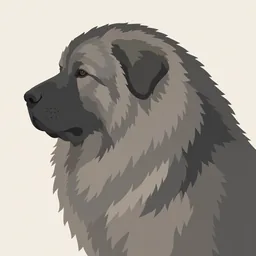
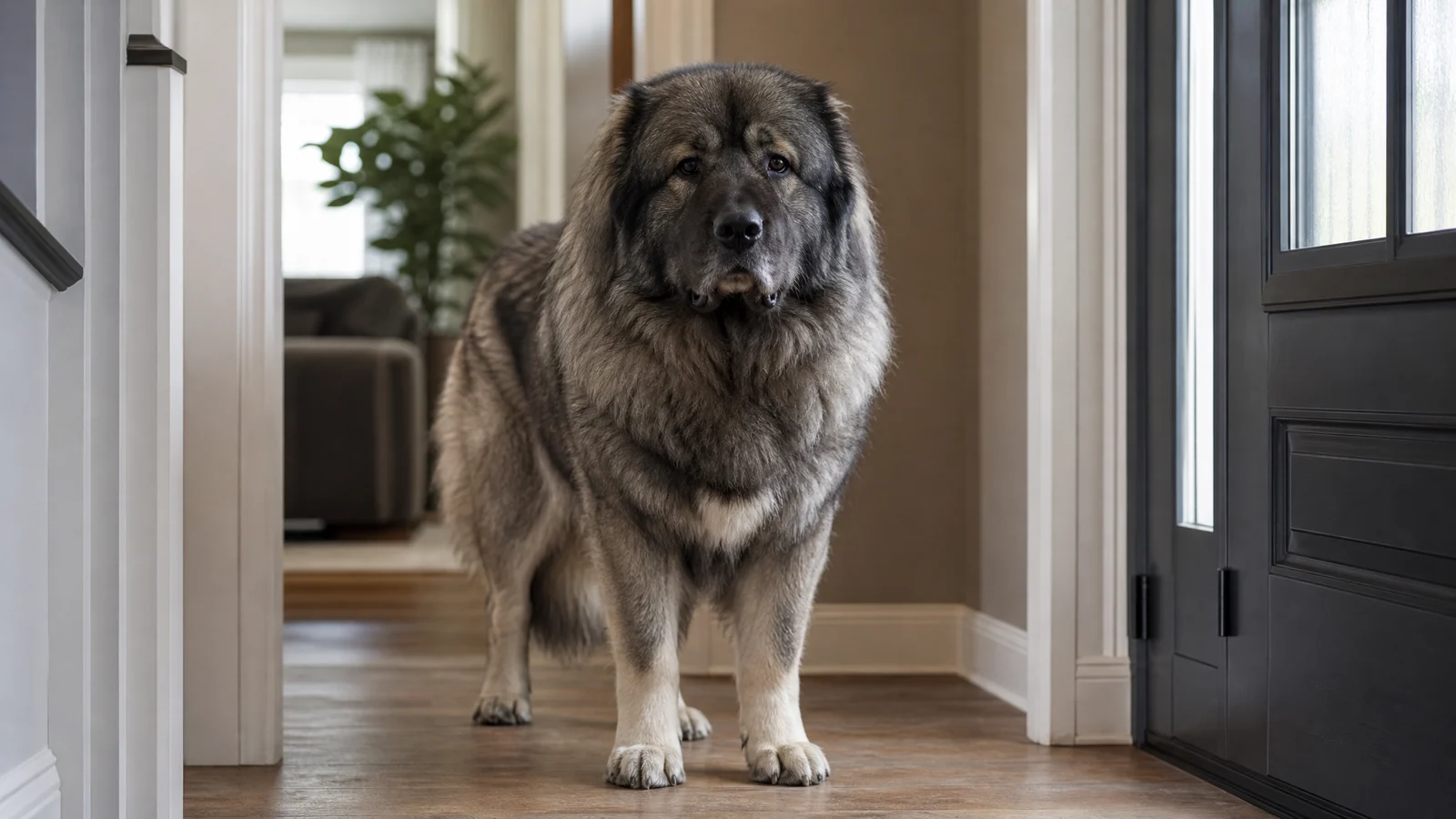
The doorbell rings, and before anyone can stand up, the dog has crossed the room and planted themselves between the family and the front door, weight forward, a low growl rolling out. A guest hesitates on the porch. This is the breed doing the job it was built for. It is protective instinct, not a wish to harm anyone.
Left alone, that habit hardens. Guests stop coming, the dog rehearses the same reaction daily, and a strong guardian who matures slowly becomes harder to read with every visit. Handled well, the same dog grows into a steady adult who lets a calm guest in and then settles. This guide covers socializing a Caucasian Shepherd Dog for visitors, from choosing the first guest and setting up the room to greeting rules, children, other dogs and the length of each visit.
Choosing Visitors for Socializing
The first decision is who walks through the door, and it deserves more thought than it usually gets. The breed is highly protective of family and property, which is why bringing people into the home can be hard, and its openness to strangers rates just 2 of 5. The breed standard adds that an active defense reaction and strong territorial instincts make the dog "very suspicious of strange people or dogs."
We have spent many years on this breed's behavior and training, and the lesson that keeps repeating is that the order of introductions matters more than the number. Each visit teaches the dog what a guest means. A rough one is easy to cause and expensive to undo, so choose your first guests on purpose.
A good first guest has a short list of qualities.
Start with someone your household already knows and trusts, ideally a person your dog has watched from a distance on walks. They should be able to ignore the dog completely, with no staring, reaching, cooing or leaning over. They also need to move slowly, speak quietly and follow your instructions without debate.
Choose an adult, because children are a separate step later in the plan.
Keep it to one person at a time. This breed reacts fast, and a second stranger doubles what the dog has to track while splitting your attention. The cost is a quieter social calendar for a while. The payoff is that every visit is one your dog can succeed at.
Plan in life stages too. The breed is slow to mature, so the invitation list grows across months and gets revisited as the dog gains size and confidence. A guest who was easy for a young dog may need a fresh, careful start once that dog is an adolescent or adult.
The choice: one calm, known guest, made boring to your dog before anyone else is invited.
Where the Dog Waits While Socializing
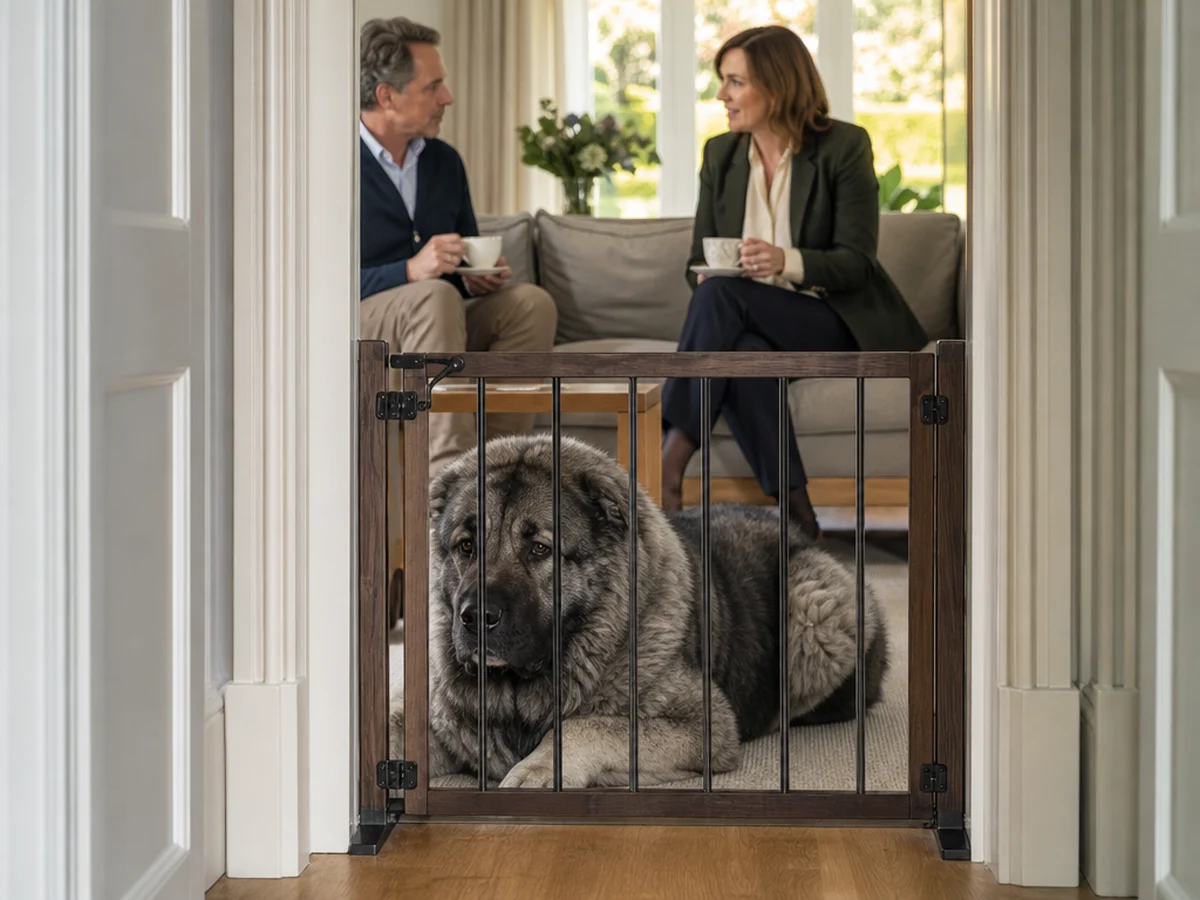
Once you know who is coming, decide where the dog spends the visit. There are three realistic options: behind a gate, in another room, or on a leash with an adult at the other end. Each one costs something, and the right pick depends on your dog's size, your home's layout and how the last visit went.
Gate, Room or Leash
A gate lets the dog watch and learn that guests come and go, but it also lets them rehearse barking and posturing at the barrier if the guest drifts too close. A closed room lowers the pressure, yet keen senses mean the dog still hears every footstep and may fret.
A leash gives the most control in the room, but only if you can truly hold a large, strong dog and keep your own body relaxed. A tight leash and a tense handler tell the dog there is something to worry about. A sound default is a sturdy gate, a closed room as the backup on busy days, and a leash only when a second adult is present.
Setting Up the Waiting Spot
Whatever you pick, set it up before the guest arrives. Put a mat, water and a long-lasting chew in the waiting spot, and let the dog settle there first. Give the chew only inside that spot, where no one can reach, and pick it up when the visit ends. The reasons dogs guard food and objects vary, but the behavior is typically based in anxiety, so a prized item near a stranger is a setup you can simply skip.
Gates and doors protect your training as well. Management protects that training by keeping the dog from rehearsing the reaction you want to change, and the work itself, desensitization and counter-conditioning, has to go at the dog's pace rather than the calendar's. Treat the yard as territory too. Guests come in through the front door, with the dog contained and the yard gate closed.
The choice: a managed setup, with a gate by default, a closed room as backup and a leash only with a second adult.
Caucasian Shepherd Dog Greeting Rules
Greeting is where the earlier decisions get tested, and the rule that does the most work is mutual ignoring. The guest ignores the dog, you do the talking, and the dog is rewarded for looking at the guest and then back at you. This takes pressure off a dog bred to judge strangers and gives their alertness a calm place to go.
It also keeps stress low, which matters for learning. In a study of 92 companion dogs, the ones trained with rewards were physically calmer afterward, with smaller cortisol rises. Paying for calm beats pushing for contact.
The Doorway
Before the guest arrives, the dog is already in the waiting spot with a mat and a chew. When the bell or knock comes, drop a few treats near the dog, then go to the door yourself. Open it just far enough to greet the guest, keep your voice level and invite them in without commenting on the dog. If the dog barks, wait for a breath of quiet and reward it at the gate. Over time the bell turns into a signal to head for the mat.
The First Minutes
The first minutes shape the rest of the visit, so run them the same way every time:
- The guest sits down and stays seated, hands in their lap, while the dog is still behind the gate.
- You reward the dog for calm looks at the guest from the greatest distance that still lets them eat, tossing treats away from the guest.
- If the dog stays loose, clip on the leash and open the gate, keeping the leash slack and the distance wide.
- The dog decides whether to approach. The guest does not call, reach, stare or lean over them.
- If the dog sniffs and wanders off, reward that and skip petting in the early visits.
- If the dog stiffens, stares or freezes, add distance or return them to the waiting spot with a treat and no fuss.
Distance is your main lever. Every foot you add makes the dog's job easier, and you can close it again later. Learn the signals in our guide to reading Caucasian Shepherd warning growls, because a dog who rumbles is giving you information, and the right response is more space.
The Exit
Leaving is a trigger people forget. A guest who stands quickly, pulls on a coat and heads for the door looks very different from one who has been sitting still, and a dog bred to watch boundaries may react more to the departure than to the arrival. Send the dog to the waiting spot with a treat before the guest rises, and let the guest leave without goodbyes aimed at the dog. Release the dog only after the door has closed and the room is quiet.
The choice: mutual ignoring, with you handling every word and every treat.
Socializing With Visiting Children and Dogs
Children and other dogs are the hardest guests for this breed, and the ratings show why. Openness to strangers sits at 2 of 5 and getting along with other dogs at 2 of 5, while young children land at 3 of 5, which the scale reads as workable with supervision. The breed standard treats mild dog aggression as a normal trait but expects handlers to control their dogs. The dog's nature is a given. Control is your job.
Visiting Children
A visiting child is a stranger who moves fast, shrieks and reaches, and a guardian dog can misread that as a threat. The size gap matters as well, since a heavy dog can knock a small child over with no ill intent. Bring children in only after adult visits have gone smoothly for a good while, one child at a time, with the dog behind the gate to begin.
- An adult stays within arm's reach of the child and manages the dog.
- The child sits and stays quiet, with no running, hugging, chasing or cornering.
- The adult hands out treats, or tosses them from a distance, so the child never has to offer food by hand.
- When play gets loud, the dog goes back to the waiting spot first and the game moves to another room.
- The dog is never left alone with a child, however calm they look.
Your own children's friends count as strangers, and noisy play in your home can set off protective behavior. Plan those visits like any other, with a gate and rewards.
Visiting Dogs
Another dog stepping into this dog's home is a bigger ask than a person doing the same. Aim for calm coexistence, not play, since the breed rates low for playfulness. These rules keep introductions safe:
- Choose a calm, tolerant adult dog with a good record around large dogs, and introduce one dog at a time.
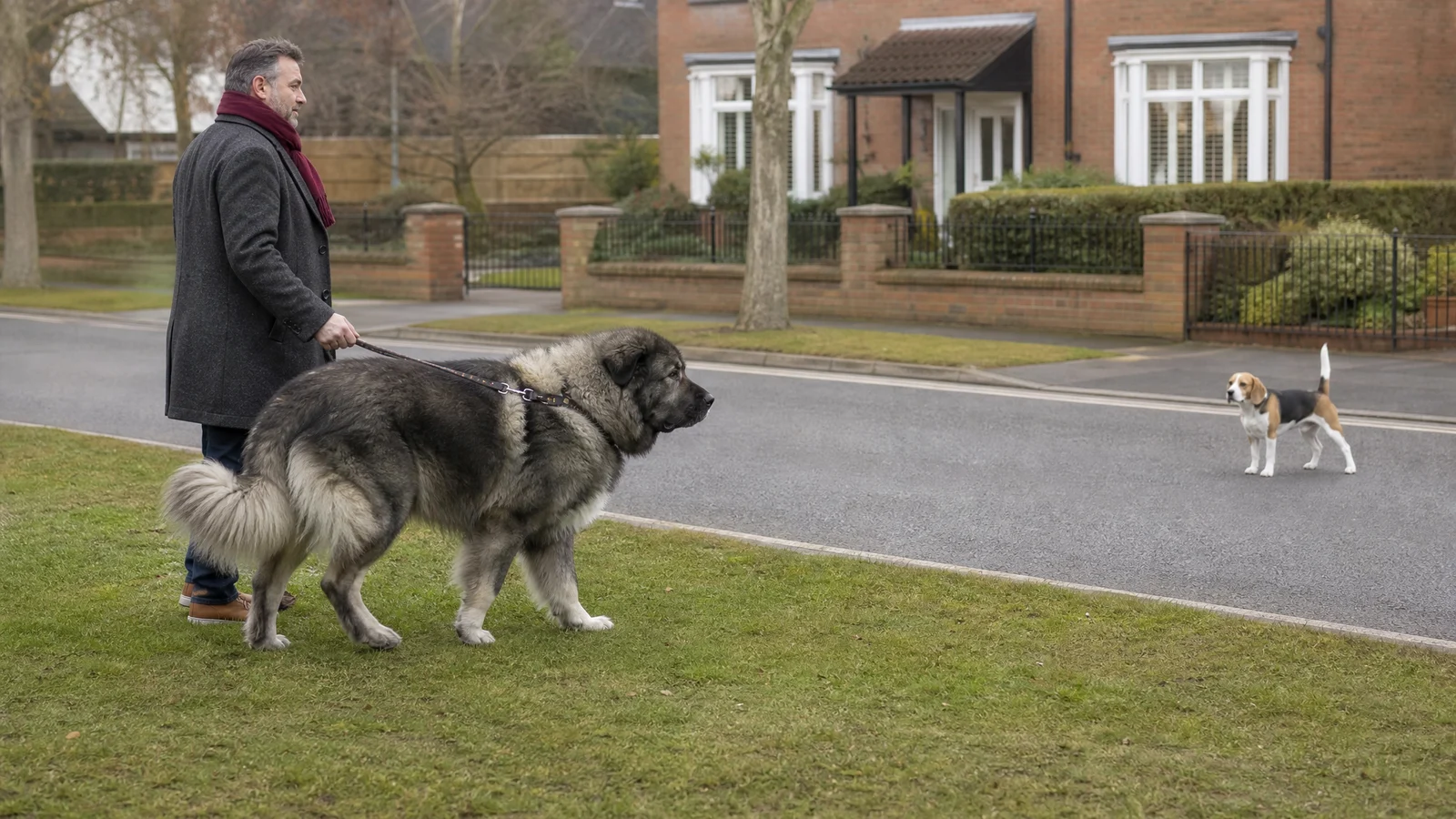
- Meet on neutral ground first, on sturdy leashes with a second adult, walking parallel at a wide distance, and reward your dog for looking at you instead of at the other dog.
- Close the gap over many outings and skip face-to-face greetings on leash.
- Bring the visitor indoors only after the outings are boring, with your dog gated off first and no food, chews or toys out.
- Skip dog parks and casual off-leash meetings entirely.
If a meeting goes badly, treat it as information, add distance and talk to a reward-based professional before trying again. The choice: adults first, then one child or one dog at a time, each behind the gate before they share space.
How Long Socializing Visits Last
The length of a visit is a decision you make before it starts, and the rule is to end while the dog is still doing well. It is tempting to let a calm visit run long because things seem fine, but a dog's coping runs down quietly, and a slip near the end teaches the wrong lesson. Watch for a stiff body, a hard stare, freezing, a low rumble or refusing treats. Any of these means the visit should already be wrapping up.
Because the breed is slow to mature and headstrong, progress comes in months and is rarely a straight line. Expect good stretches followed by a rougher patch as the dog grows in size and confidence, and step back a stage when that happens. Stepping back costs a little time. Pushing ahead can cost the trust you have built.
This sketch shows how visits can grow over time. Move to the next row only when the current one feels boring.
| Stage | What the visit looks like | What the dog does |
|---|---|---|
| Early | One known adult, brief, seated | Waits behind the gate and earns treats |
| Building | Same adult, a little longer | Rests on the mat and glances at the guest |
| Settled | Dog joins on leash at a wide distance | Chooses to approach or stay away |
| Widening | A new adult, then a child or dog | Settles, then takes a planned break |
Give the dog a quiet day after a harder visit. The breed is usually calm indoors and happy with steady walking, so a relaxed leashed walk helps them recover. The choice: short, successful visits, repeated many times, ending before the dog is tired of being good.
Guest-Ready Caucasian Shepherd Dog
Put these decisions together and a routine appears. One calm guest arrives, the dog is already waiting, mutual ignoring happens at the door, the visit stays short and the exit is quiet. The household stops feeling like a standoff. The bell rings, the dog walks to the mat, collects a treat and watches while you talk. They stay alert, because that is the breed, but the alertness no longer turns into a blockade at the door.
The standard says socialization and patient training can temper the breed's suspicion toward strange people and dogs and lead to an adult with sound judgment. That takes time, so keep up regular vet visits and mention any sudden change in behavior, since pain can look like guarding. If other guardian habits show up, our guide to the Caucasian Shepherd guardian instincts behind problem behaviors goes further.
- The body is loose, with a soft face, a relaxed mouth and shoulders that are not stacked forward.
- The dog goes to the mat and settles on cue when the bell rings, even if they keep watching.
- They recover quickly after the bell and are resting again soon after the door closes.
- They take treats with a guest in the room, and the distance shrinks without you pushing.
Watch for a dog who stiffens, stares hard or freezes whenever a guest moves. The same goes for a dog who lunges or snaps at guests or at the gate, or who guards people or spaces rather than just announcing a visitor. Another sign is that many consistent visits bring no improvement, or that things get worse.
In those cases, see your veterinarian first to rule out pain or illness, then a qualified reward-based behavior professional. You are not trying to turn a guardian into a greeter. You are building a steady adult who knows when to relax, one calm guest at a time.
 BehaviorTeaching a Caucasian Shepherd Guard Dog to Watch the Yard Calmly
 BehaviorManaging a Caucasian Shepherd Who Dislikes Strange Dogs
 BehaviorQuieter Nights for a Caucasian Shepherd Who Barks at Every Sound