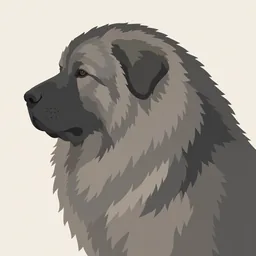
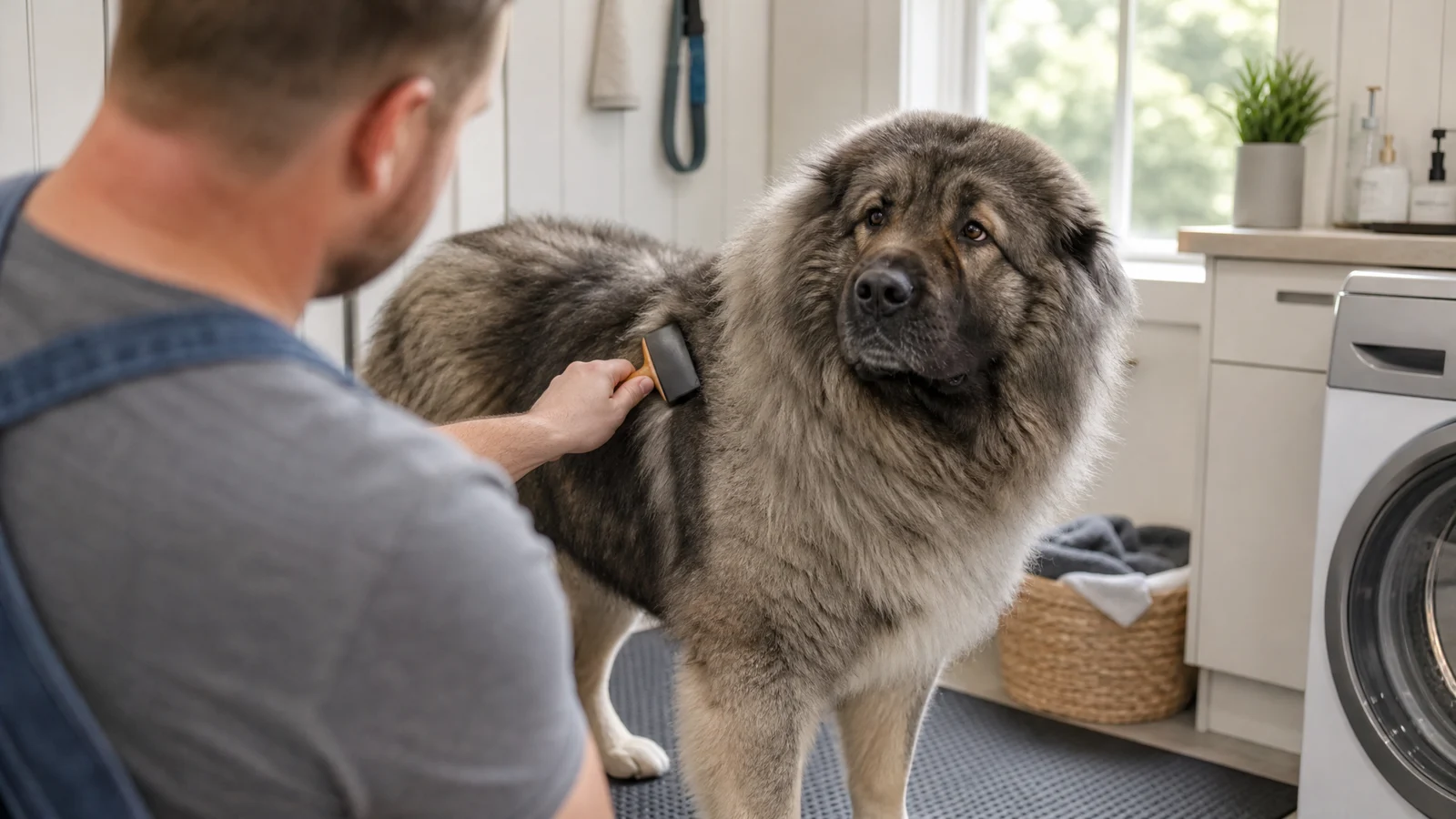
Your best window for handling practice opens the day your puppy comes home, and it narrows with every pound. Touch is still new rather than threatening in those first weeks. Then comes growth toward a full weight of 99 to 170 pounds, followed by adolescence, when size and opinions arrive together.
Handled badly, grooming becomes a wrestling match you lose and vet visits become a safety problem. Handled well, a giant dog stands calmly for the brush, the clippers and the exam. Our team has focused on this breed's handling and manners for many years, and everything here is built for a watchful, independent giant.
Below, you'll find why this breed resists touch, how Mountain and Steppe coats change your routine, and the step-by-step training, including nail, ear and tooth work, age-by-age timing and vet-visit rehearsal.
Why a Caucasian Shepherd Dog Resists Being Handled
A flock guardian works without a handler at their shoulder. The likely reason this breed resists handling is that they were developed for independent, watchful work, and the breed profile fits that picture: protective nature rates 5 of 5, openness to strangers 2 of 5, and trainability 3 of 5, a score that points to a dog who cooperates when it makes sense to them instead of one who simply wants to please.
Now apply that to touch. A stranger reaching over the shoulders, a vet gripping a leg, a groomer lifting a paw: each asks a watchful dog to stay put for something they never chose. If handling has never meant anything good, a dog like this may stiffen, turn away or push back harder as the pressure rises. The breed standard lists fearfulness as a serious fault and viciousness or extreme shyness as a disqualification, so steady nerves matter.
Size raises the stakes. Adults stand 23 to 30 inches tall, and males are more massive and more powerful than females. You cannot hold that much dog still by force, and trying only teaches them that handling is a fight. So you teach cooperation instead, one small, paid step at a time. Everything below builds on that idea.
Mountain Coat Versus Steppe Coat Grooming
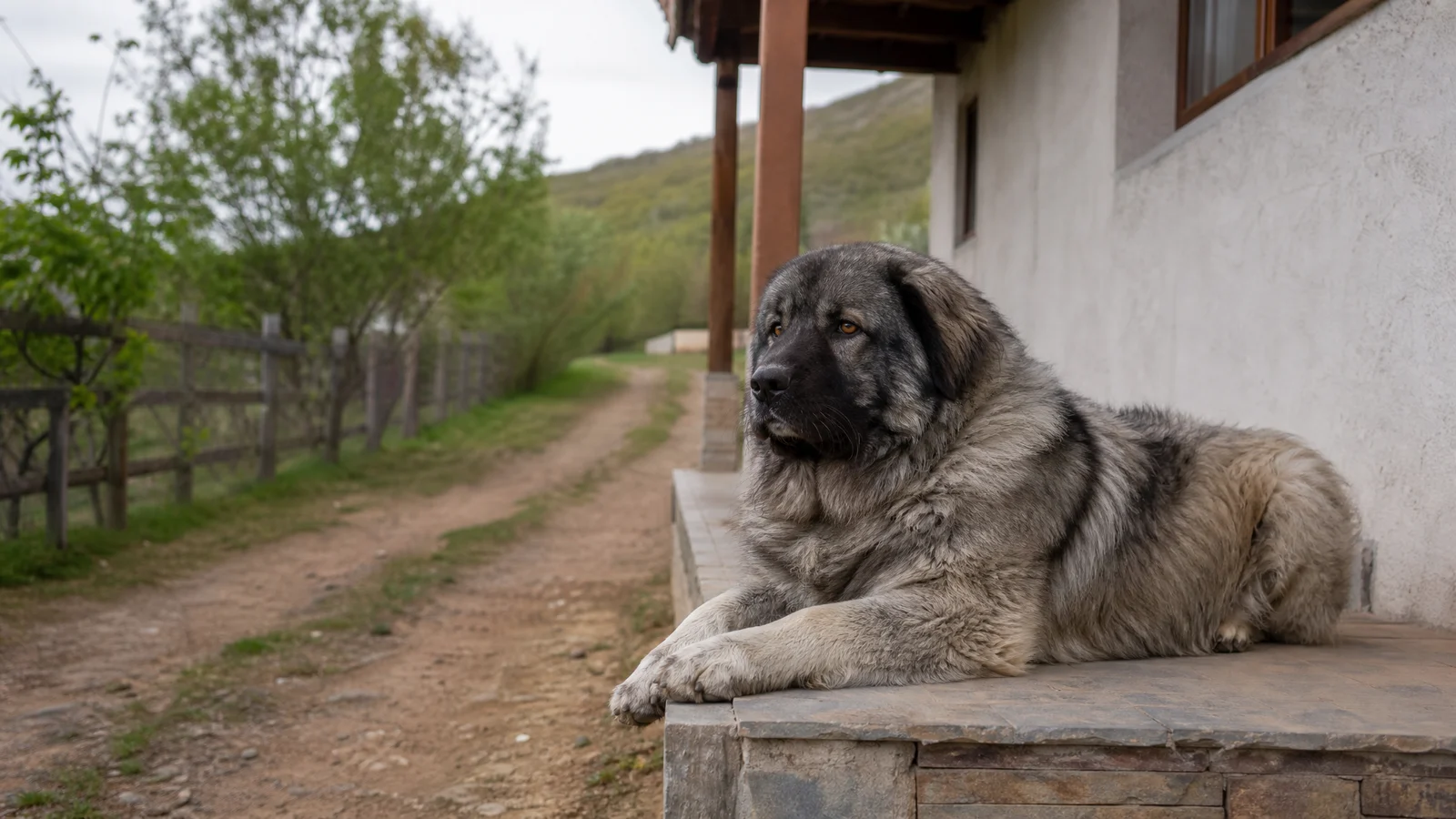
Put your hands in the coat before you choose a brush. For almost a century there have been two breed types: the Mountain type is long-coated with a heavier body, and the Steppe type is shorter-coated with a lighter one. Type also varies by home region, and coats run from very long to short, so plenty of dogs land between the two. Go by what you feel under your hands, not by a label.
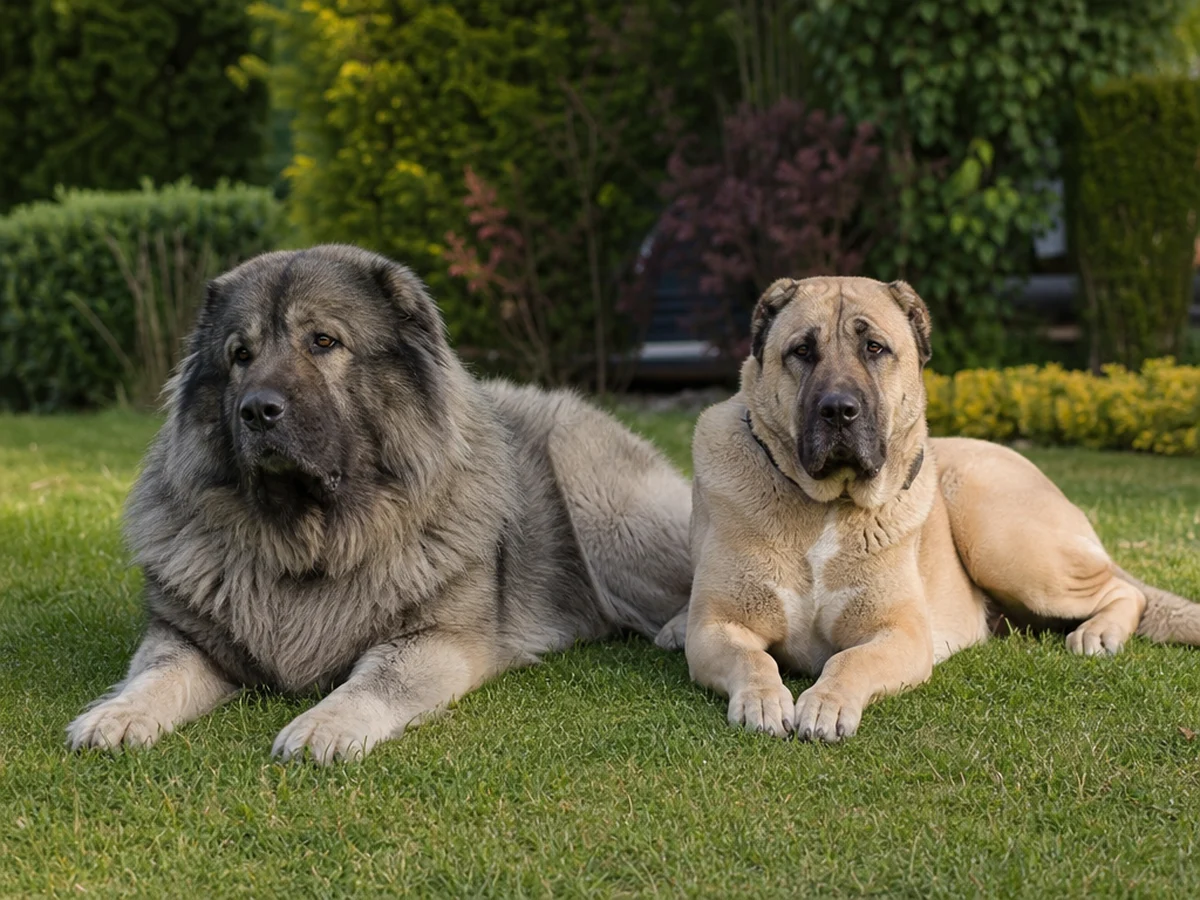
The table below sets the two types side by side for upkeep and for what your training has to solve.
| Feature | Mountain type | Steppe type |
|---|---|---|
| Coat and body | Long coat, heavier body | Shorter coat, lighter body |
| Brushing rhythm | Daily, because longer coats need it | About weekly as a baseline |
| Tools | Slicker brush, wide-toothed comb, rake for dense areas | Rubber curry or soft-bristle brush |
| Training focus | Calm standing while you work through the coat in sections | Short, frequent sessions that fold in nails, ears and teeth |
| Handling challenge | More mass to steady and more hair to part for ear and skin checks | A leggier build that may fidget or lean away |
Both types shed and drool, each rated 4 of 5, so plan for hair and slobber whatever the coat length. Keep a towel at the grooming spot and wipe the mouth at the end of each session. That turns drool cleanup into one more handling exercise your dog already accepts. Nails, ears and teeth need regular care in both types, no matter how short the coat.
Build matters for your plan too. A big male Mountain dog is the hardest case for standing still, since there is simply more of them to support. A daily brush on a long coat only works if your dog volunteers to stand there. A lighter Steppe female gives you more room for error, but the same consent rules apply.
Cooperative-Care Training for Grooming Sessions
Cooperative care means your dog takes part in grooming instead of enduring it. You supply a predictable place, a marker word and a way for them to say yes or no. They supply the willingness, and you pay for it every time. For a giant, this is the only method that keeps working once the dog outweighs you.
First Steps With Mat, Marker, and Button
Choose one spot and use it every time. Work on the floor on a non-slip mat in a quiet corner with a wall on one side, away from the door and windows. A dog who rates 5 of 5 for watchfulness will not relax while monitoring the entrance. Lay out treats, brush and towel before you call your dog, so you never leave mid-session.
Choose a short marker word, for instance yes, and speak it the instant your dog accepts a touch. Then feed low and close, right where you want their attention. Food does most of the work, since the breed rates 2 of 5 for playfulness and a toy rarely beats a good treat. Add calm praise, and finish with an easy sniffing walk as the final payment.
Next, teach a start button, a behavior that means your dog is ready. A chin rest on a folded towel works well, and so does simply standing on the mat. Touch a shoulder while the button is held, mark, feed. When your dog moves off, stop touching and wait. If they return, carry on. That choice is the consent, and it keeps a strong dog willing.
Raising the Difficulty
Change one thing at a time. Start at the shoulder and back, where touch is easiest. Once your dog accepts touch all over, move on to handling ears, lips, and paws and then the tail. Use this ladder, and drop back a rung whenever your dog hesitates:
- Hold each touch a little longer before you mark.
- Stroke the whole length of a limb before you mark.
- Introduce each tool by showing it, feeding, touching it to a shoulder, then feeding again.
- Use soft meat or cheese in tiny pieces for new steps, and drop back to kibble once a step is easy.
- Save your single best treat for the scariest step and use it only there.
Common advice says to power through a hard task and get it over with. With a giant, that backfires, because one rushed trim teaches them to dodge every later one. If your dog steps away, pause, then invite them back with a treat. End each session on an easy step.
How Early Should Grooming Practice Begin?
Start the day your puppy comes home. In those first weeks handling is still novel, and you can steady the whole dog in your lap or between your knees. Anything you introduce then costs far less effort than the same job in a dog several times the size. Later stages also go easier when the habit already exists.
Puppyhood Is the Easy Window
Keep puppy sessions to a few touches and a treat. Touch paws, ears, lips and tail, run a soft brush down the back, and let your puppy lick paste off a toothbrush. Introduce the towel, the mat and the sound of a grinder from across the room. If you own a Mountain type, start the daily brush now, so it feels normal long before the coat gets long.
Adolescence Tests the Habit
As your dog grows toward adult size, they also gain confidence and opinions. A watchful breed may question touches that were easy before. Keep sessions short, drop back a step when your dog hesitates, and raise the treat value. Do not pause grooming until your dog is grown, because the gap lets the habit fade and a Mountain coat turns the gap into tangles.
Adults and Late Starters
An adult who never learned handling can still learn. Go back to the first step, a single touch and a treat, and move at their pace. Expect more sessions than a puppy needs. Because the dog is now large and strong, add a helper who feeds treats while you touch, and hold off on a full nail trim until one paw is easy. If one spot always triggers a flinch, mention it at your next vet visit in case something hurts.
Nail, Ear, and Teeth Grooming Without a Struggle
Nails should be trimmed regularly, ears checked regularly and teeth brushed regularly, whatever the coat. With a strong dog, pacing is the trick: work on one task per session and finish while your dog is still relaxed. Match your gear to the dog too. Choose clippers sized for large dogs or a grinder, a dog toothbrush with dog toothpaste, soft cloths for the outer ear, and a few towels.
Nails
Large dogs often dislike having a paw held up, so teach the lift as its own game before any tool appears. Work down these steps, and advance only after your dog stays loose and relaxed at the current one:
- Touch the paw, mark and feed.
- Lift it briefly, mark and feed, then build to longer holds.
- Hold the paw and rest the side of the clipper against a nail, mark and feed.
- Clip a single nail tip, mark and give a jackpot of several treats.
- Add one nail at a time over many sessions until a full paw is easy.
If you use a grinder, run it across the room first, then touch it to the nail switched off, then switched on for a moment. Many dogs find the buzz scarier than clipping, so pay for calm at every stage. One nail a day beats a full set that ends in a standoff.
Ears
Cup the ear flap, look inside, mark and feed, then wipe the outer part with a soft cloth. A heavy Mountain coat needs the hair parted so you can see in, while a Steppe dog's shorter coat makes the check quick. If you see redness, a smell or discharge, call your vet instead of cleaning harder.
Teeth
Let your dog lick paste off the brush for a few sessions. Then lift one lip at the side, mark and feed, run a finger along the gum, and finally brush just the front teeth. Build toward the back teeth over weeks. This dog has a lot of mouth, so keep your hands slow and predictable, and stop the moment they turn their head away.
Can a Caucasian Shepherd Dog Accept Vet Handling?
Yes, if you rehearse. A clinic asks a watchful, reserved dog to stand on a slick floor while a stranger touches everywhere, which is among the hardest tests this breed faces. Book regular veterinary checkups for the life of your dog, and treat each one as practice for the next. Then break the visit into pieces you can rehearse at home.
Mock Exams on the Mat
Once a week, run a pretend exam on the grooming mat. Look in the ears, lift the lips, check each paw, run your hands down the legs, lift the tail and press gently along the belly. Mark and feed after each piece. Then add a helper your dog knows, who feeds treats while you touch, and swap roles. Add a gentle hold last, an arm resting lightly around the chest, and release the moment your dog is calm.
Muzzle Comfort and Scale Visits
A muzzle can make a stressful procedure safer for everyone, but only if your dog likes it. Muzzle-train with rewards, because putting one on an untrained dog scares them and makes every later attempt harder. Feed treats through the front, then build to wearing the strap for a few moments. A basket style lets your dog pant and take treats.
Then run happy visits. Stop by the clinic with no exam planned, step on the scale, collect treats from the staff and go home. Weigh-ins matter for a dog this size, and a dog who weighs in for free snacks walks in calmer when the visit counts.
Coordinating With the Clinic
Call ahead. Tell the staff your dog is giant, watchful and in training, and ask for a quiet room or a time when the waiting area is empty. Bring your best treats, ask staff to let your dog approach instead of reaching over them, and request an exam on the floor rather than a table. Share your marker word. A clinic that knows your plan can match it.
Short Daily Grooming Sessions Keep a Caucasian Shepherd Dog Cooperative
Build a weekly rhythm you can actually keep. For a Mountain coat, brush every day and tuck one extra task into that session, such as an ear look on one day and a paw lift on the next. For a Steppe coat, make the weekly pass a handling checklist of ears, lips, paws and tail. Rotate nails and teeth so each gets regular attention without piling onto one day. Three follow-up questions usually come next:
- What does the puppy training schedule look like around handling? Our Caucasian Shepherd puppy training timeline shows how it sits beside the other early skills.
- Is a warning growl or barking during handling a problem? Treat a growl as information, stop, back up a step and pay for what your dog can handle, then read up on barking and warning growls.
- How do guests and visitors fit in? Ask visitors to skip touching until your dog offers, and keep grooming and exam-style handling to people your dog knows.
This breed grows into a big, strong, independent dog who decides what feels safe. Small daily sessions keep that decision in your favor. A few paid touches each day beat an occasional marathon, because they teach your dog that handling is brief, predictable and worth it, long before size makes any other approach possible.
 BehaviorWelcoming Visitors to a Caucasian Shepherd Guard Dog
 BehaviorTeaching a Caucasian Shepherd Guard Dog to Watch the Yard Calmly
 BehaviorManaging a Caucasian Shepherd Who Dislikes Strange Dogs