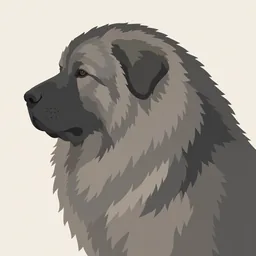
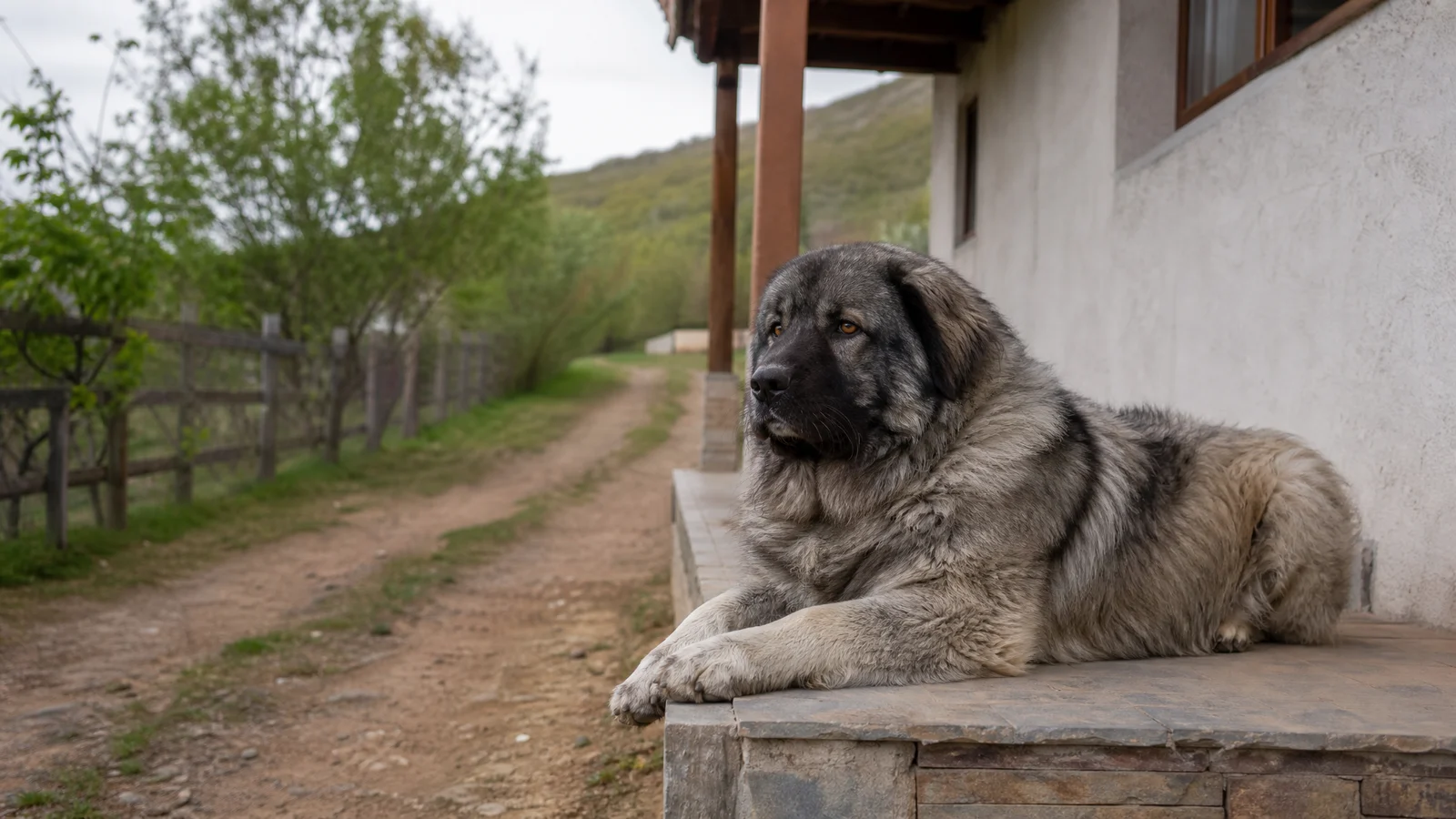
The breed standard describes a keen, very alert guardian who protects family and property from danger, real or perceived. The usual advice follows from that: give a guardian room and let them stay on duty. Plenty of yards tell a different story, with dirt worn bare beside the boards and a dog still pacing it.
This matters for a Caucasian Shepherd Dog because nonstop patrolling keeps them wound up, and a wound-up guardian is harder to live with and harder to read when something truly changes. Calm watching from a chosen spot gives you the same vigilance without the laps. Read on for the beliefs people hold about guarding the yard, each checked against how the breed works, then a two-week routine built on a mat, a platform and a few changes to the yard itself.
Caucasian Shepherd Dog Exercise Beyond Guarding the Yard
Yard size does not measure useful exercise, and more fence line can simply create a longer patrol route. These dogs are described as low energy, with endurance suited to walking and hiking, so extra room does not wear them out the way it might a runner. What a bigger yard does add is more boundary to check and more corners where the street sits close.
Patrolling feeds itself. The more fence there is, the more events there are, and every event becomes another lap. A larger yard can therefore produce more pacing, not less.
What helps is a smaller, calmer patrol area. Trim the sightlines with panels, block the worn strip and leave the dog one clear view from the post. Exercise comes from leashed walks, and because the breed is intelligent and independent, secure containment is the rule whenever they are out in the yard.
Give the mind something to do besides scanning. Mental stimulation needs are moderate, so a chew or a puzzle feeder on the mat makes lying there more rewarding than scouting the boards. Our page on common guardian behavior problems explains why these habits take hold so strongly.
Fence-Line Recovery While Guarding the Yard
Fence-line recovery starts by lowering arousal and guiding your dog toward a paid alternative. With this breed it tends to do the opposite. A dog who is already aroused gets more aroused, and a strong-willed dog is more likely to dig in than to give way.
There is a second cost. The dog links the unpleasant moment to whatever they were looking at, so people and dogs on the sidewalk begin to predict trouble, which can deepen the suspicion the breed already has. Growls and stiff stares are warnings, and the advice to never punish guarding holds at the fence too, because a scolded dog may learn to hide the warning.
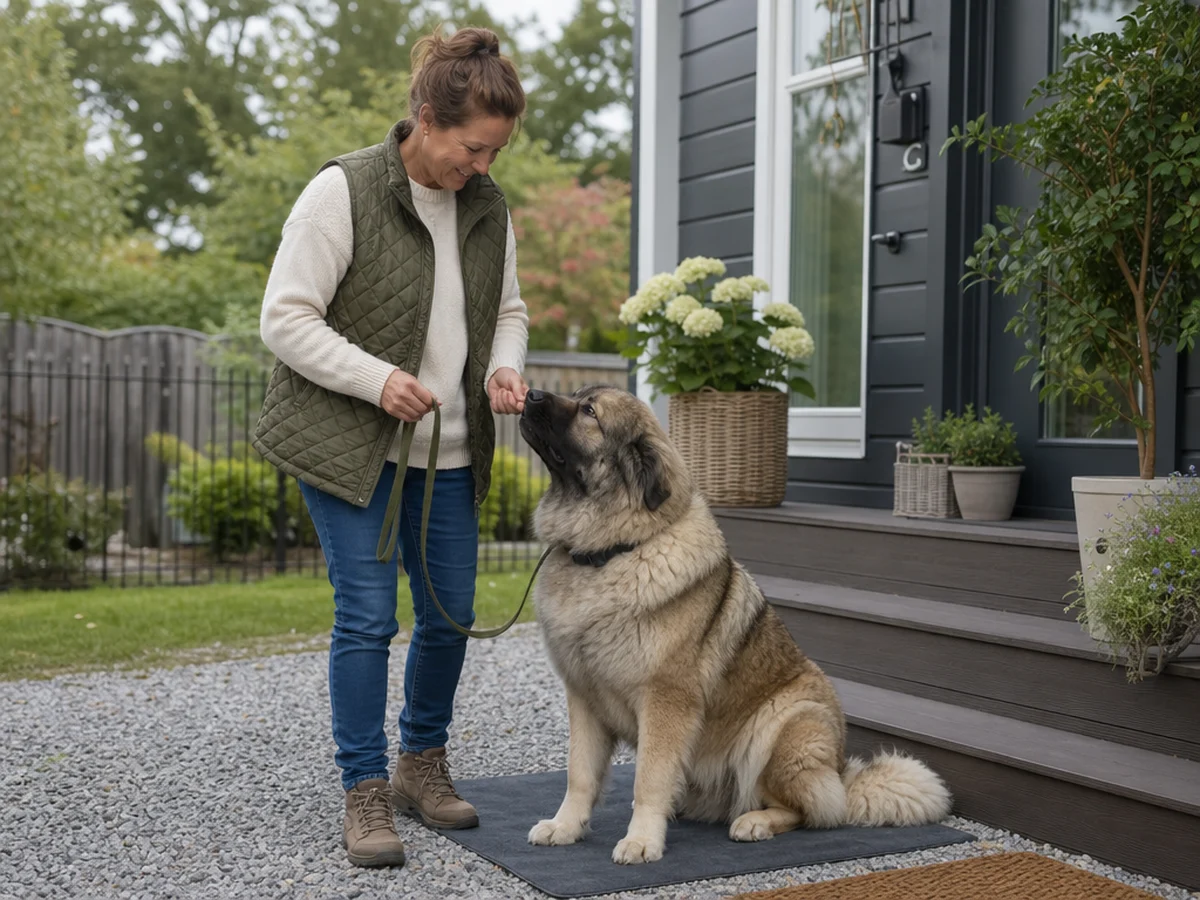
Do this instead. Walk to the dog calmly, say nothing sharp, and guide them back toward the spot with a treat at the nose or a quiet cue. Reward the moment they lie down again, even if the exchange took a while. If the dog keeps leaving, the session is too hard, so shorten it, move the spot farther from the trigger or wait for a quieter hour.
Keep gates latched and the fence secure throughout, since this breed can react with lightning-quick speed and handlers are expected to keep control. When safe management at home is not working, a behaviorist's help is the right next step.
Caucasian Shepherd Dog Barking During Yard Watch
Barking at every passerby fails the useful-yard-guarding test because the response no longer distinguishes ordinary movement from a real change. The breed does have keen senses, and warning barks and growls at changes are normal, especially at night. That is a useful alarm, and the trouble starts when it goes off for the same predictable thing every day.
A real alert follows a change, stays short and ends once the dog has looked and decided. Habit barking follows a schedule, such as the mail carrier or the school bus, runs on and on, and usually comes with the pacing. These dogs rate low for barking overall, so a dog who is constantly vocal is often telling you about the setup of the yard, not about danger.
Start with what the dog can see. Solid panels or tall plantings along the stretch nearest the sidewalk remove the sight of walkers, which is often the biggest trigger. A planter line, a low pen or a gate across the worn strip keeps the dog off the boards between sessions, so the habit stops getting rehearsed.
Then pay for the quiet half. When the dog gives a bark or two and stops, mark the pause and reward it. If barking runs late into the dark, our page on quieter nights for this breed goes further.
A Watching Spot Away From the Boundary
A mat or platform works when it wins on two criteria: the view and the rewards. Dogs go where those are, so the post has to offer both before the fence loses its pull. Choosing the place and paying for the behavior are the two halves of the job.
Location Criterion
Set the mat back from the fence, facing the direction where most activity happens, so the dog can see the approach without pressing against the boards. Skip any corner where two fences meet, which pulls a dog straight into the busiest sightline. Shade on warm days and a pad underneath in cold or wet weather make lying down more comfortable than walking.
A platform suits a dog who likes height. Keep it low, wide and very stable with a non-slip top, since a heavy dog should step on and off rather than jump. Offer both and keep whichever the dog chooses without coaxing.
Reward-based does not mean anything goes. A set spot with a set routine is the structure and routine that humane training relies on.
Recovery Criterion
Work when the yard is quiet and build the behavior in this order. Each step adds only one demand.
- Mark and treat for stepping onto the mat or platform, handing the treat over right on the spot.
- Reward a down, then slowly stretch the gaps between treats while the dog stays settled.
- Mark the moment the dog turns their head to look out calmly, so relaxed looking becomes the behavior that pays.
- Release with a word and end while the dog still has energy to spare.
This breed is independent and strong-willed, and matures slowly, so expect to need extra patience and consistency. Several short sessions beat one long one. Playfulness is low, so food and calm praise will usually outperform toys.
Calm Caucasian Shepherd Dog Scanning While Guarding the Yard
Calm watching meets the standard when your dog notices a change without circling or rushing the boundary. Alertness stays for life. It shows as a lifted head, a fixed look toward a change, and a low warning bark when something truly is different.
These dogs are active outdoors but usually fairly quiet in the house, and they are described as low energy with good endurance for walking. A dog lying on a spot with a clear view is doing what they were bred for, which is watching and saving effort for the moment it counts. Sluggishness is a serious fault in the standard, but that describes a dog who fails to respond, not one who watches calmly and rises when needed.
A relaxed dog often sees more, because they are not busy circling with their head down at the corners. If you are unsure whether a stare is calm or tense, our guide to telling angry from alert shows the differences.
Keep regular vet visits on the calendar too. A dog who suddenly settles less than before, or seems dull rather than relaxed, may be uncomfortable, and your veterinarian can sort out which it is. Calm watching is still guarding, and it is the kind you can keep up for years.
Guarding the Yard Scorecard
Judge the setup by independent criteria instead of moving through a fixed program. Watch several ordinary yard sessions before changing anything, then record the same measures after one management change. This shows whether the fence, the watching spot, the exercise routine or the barking response is the factor that matters.
Use the same observation window each time so the comparison is fair. Note whether the dog was alone or supervised, whether the trigger moved along the boundary or stopped, and whether the dog had already walked or trained that day. A fast recovery after an easy event should not be compared with a prolonged reaction to someone standing at the gate. The scorecard is useful only when the situations are similar enough to show a real pattern.
Context also keeps one good session from becoming the conclusion. Record several ordinary repetitions, including a quiet period and a busier one, before deciding that a change works. If moving the watching spot helps only when the street is empty, keep the management but continue training around low-level activity. If response to the owner improves across different events, that is a stronger sign that the new routine is becoming reliable.
Keep the record beside the yard door so every supervising adult measures the same behaviors instead of relying on memory. That consistency makes the next comparison useful.
Reading Guarding-the-Yard Results
Read all five criteria together before keeping a change. One quieter symptom does not outweigh slower recovery or harder movement back indoors.
| Criterion | Record | Useful direction |
|---|---|---|
| Fence-line recovery | Time from the passerby leaving to a loose body | Recovery becomes faster |
| Response to the owner | Whether the dog can turn away after one cue | Fewer repeated cues |
| Watching position | Distance from the boundary while observing | More watching from the chosen spot |
| Alert barking | Number of barks after the event is gone | The alert ends sooner |
| Leaving the yard | Whether the dog can come indoors without a standoff | An easier transition inside |
A result that improves in one column but worsens in another is not finished. For example, less barking with harder fence charging only changes the outward sign. Keep the setup that improves recovery, response and movement together.
If the scorecard shows no recovery, repeated lunging or a dog who cannot disengage, reduce unsupervised yard access and bring in a credentialed trainer who uses rewards. The goal is not to remove guardian awareness. It is to make the end of the event visible in the dog's body and choices.
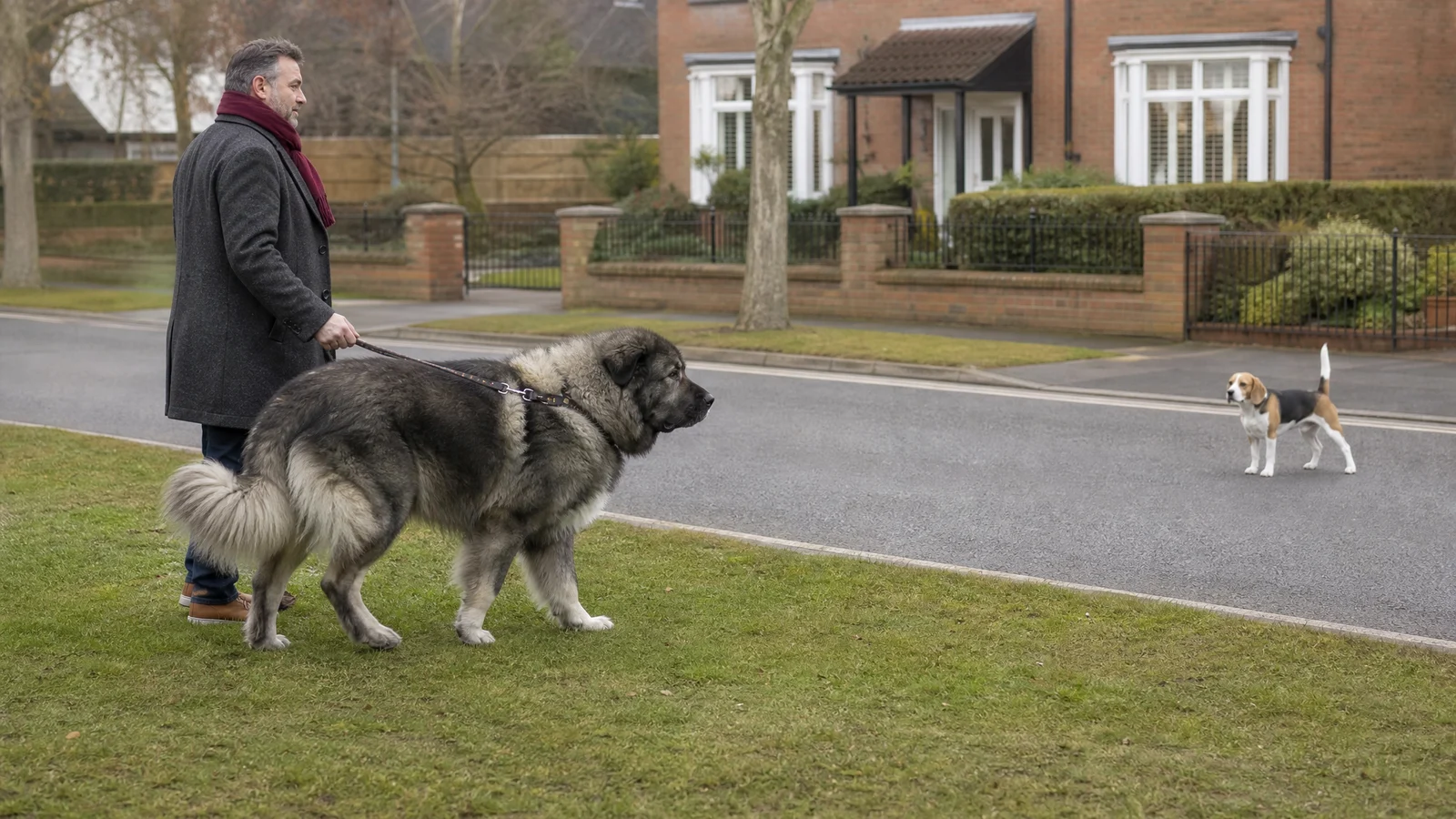 BehaviorManaging a Caucasian Shepherd Who Dislikes Strange Dogs
 BehaviorQuieter Nights for a Caucasian Shepherd Who Barks at Every Sound
 Training basicsStop Pulling and Lunging When Walking a Caucasian Shepherd