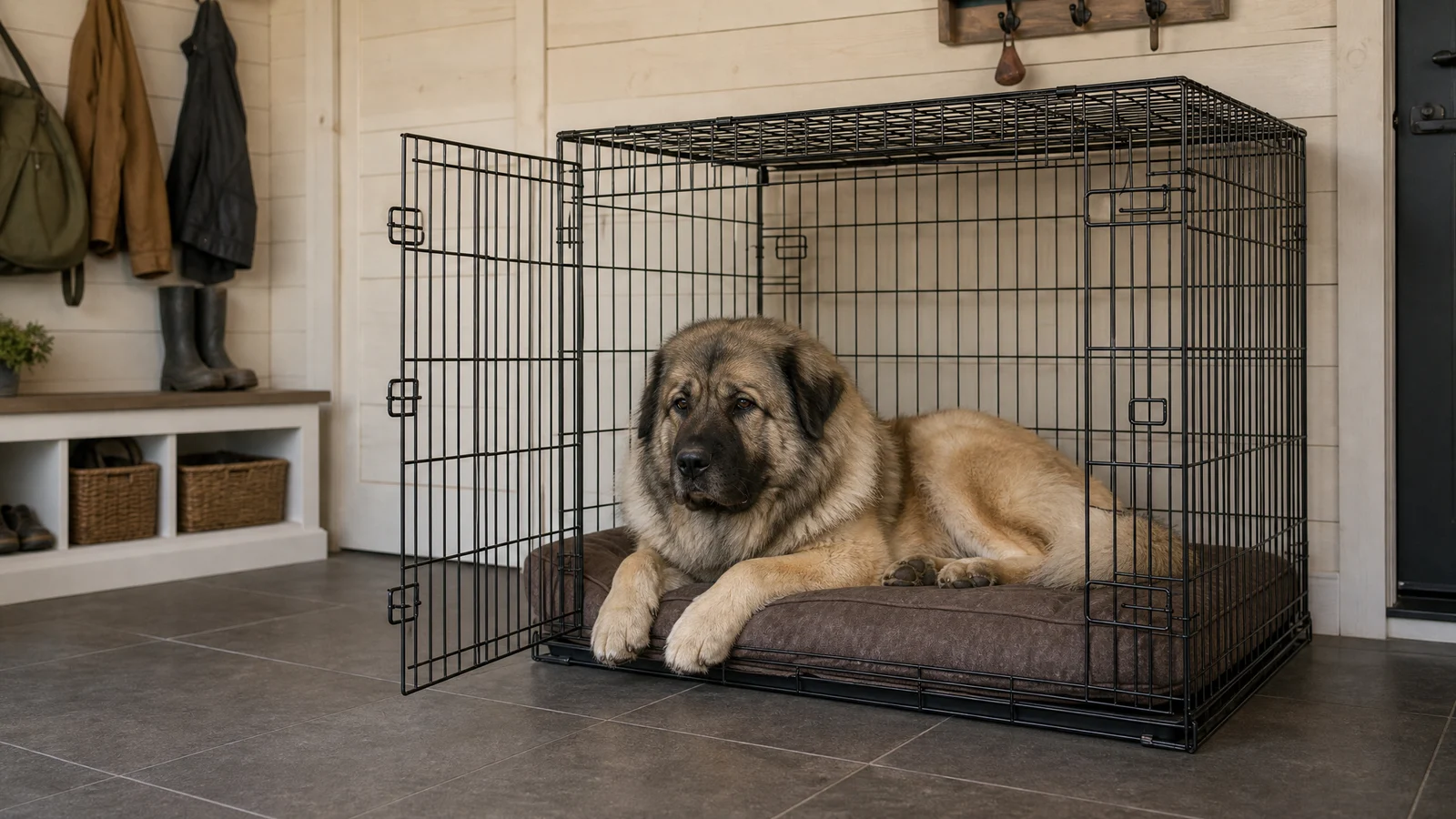
Crate training a Caucasian Shepherd Dog is not a test of how long they will tolerate confinement. The useful goal is voluntary rest in a space that fits a very large dog, followed by gradual practice with the door, your movement, and short absences. Each layer should remain comfortable before the next one begins.
Crate comfort and being alone are related, but they are not the same skill. A dog may nap in an open crate and worry when the household leaves, or prefer a gated room while alone. This guide builds a comfort ladder, explains what distress looks like, and shows how to practice flexible rest without forcing the crate to solve every absence.
The Goal of Caucasian Shepherd Dog Crate Training
A crate can provide a quiet resting place, help manage a busy household, and support travel or recovery routines. It should not be used to overpower an independent dog or to contain distress until the dog stops showing it. Silence after a struggle does not tell you that the dog feels safe.
The crate guidance from the ASPCA draws an important distinction. Some dogs learn that a crate is a secure place when alone, while others become more stressed there and do better in a room behind a gate. Your dog's behavior decides which setup is suitable.
Define success through observable choices. The dog approaches without being pushed, enters without following visible food every time, can turn and lie comfortably, and leaves without rushing when released. Those behaviors matter more than a clock.
Crate training also needs a clear end. Give the dog a release cue, open the door, and let them leave. Predictable exits reduce uncertainty, while surprise confinement can make an observant, strong-willed dog wary of entering again.
Does the Crate Fit the Dog and the Room?
Physical fit is the first training condition. The dog needs room to stand naturally, turn without folding their body, and rest on their side. A crate meant for a small puppy may become unsuitable quickly, so check fit often and adjust any divider before space becomes cramped.
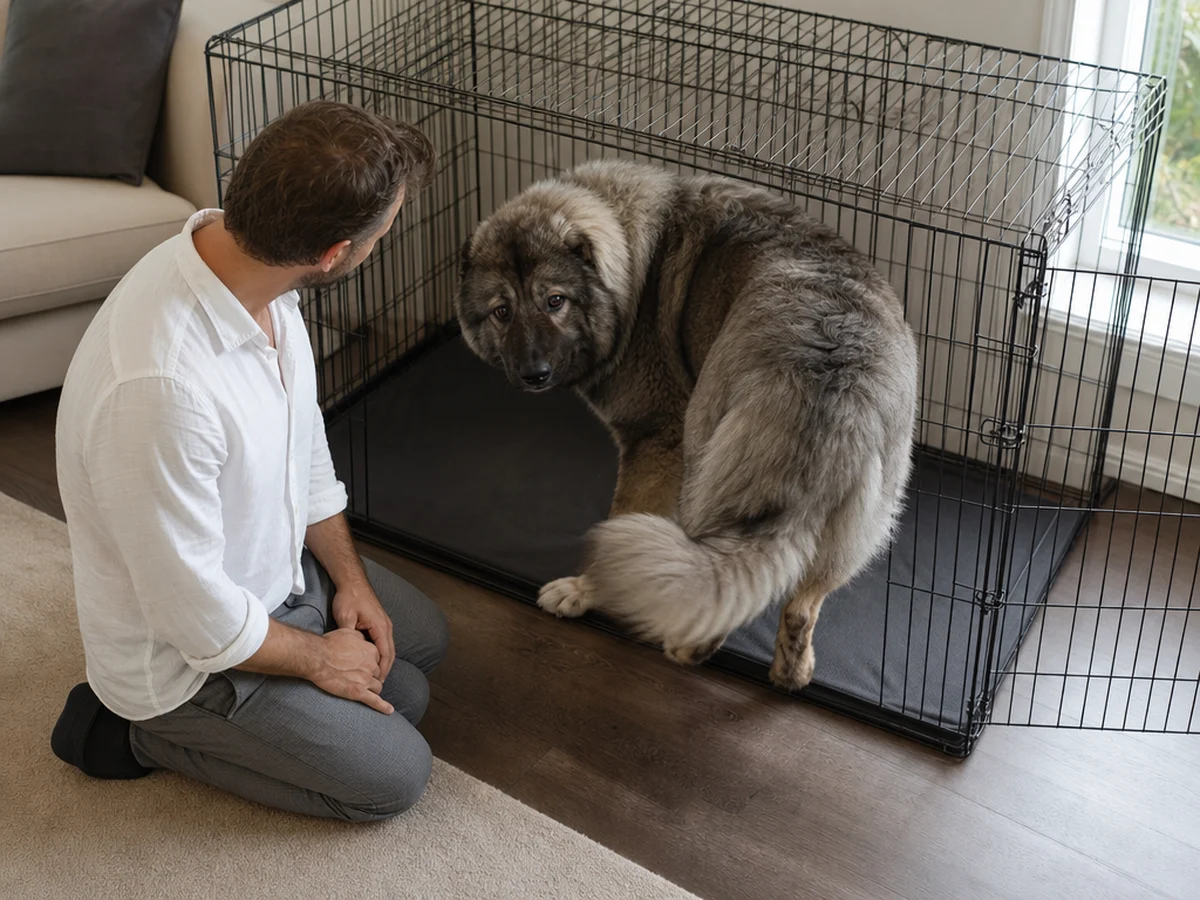
Stability matters with a powerful dog. Set the crate on a level surface where it does not rattle, slide, or pinch bedding when the dog shifts. Check latches and edges by hand. The crate should remain a neutral piece of furniture, not a noisy object that surprises the dog during entry.
Place it where the dog can rest without being isolated from ordinary household life. Avoid a path where people repeatedly brush the door, a window that invites constant scanning, or a hot spot beside direct sun. A calm corner near family activity often gives the best balance of inclusion and sleep.
Prepare the space before inviting the dog to investigate. Every detail should make approach and rest physically easy.
- Secure the door fully open so it cannot swing toward the dog.
- Use comfortable, washable bedding only if the dog rests safely with it.
- Keep water access and room temperature appropriate for the planned rest period.
- Remove collars or attachments that could catch when the dog is unsupervised.
If the crate cannot provide safe, comfortable movement, change the setup rather than trying to train through the problem. Good training cannot make an unsuitable space fit.
Crate Training Starts With an Open Door
The crate training process may take weeks or longer, and the dog's comfort should set the pace. That principle is especially useful when a large dog can make avoidance very clear. Begin with choice rather than placing the dog inside.
Reward the Approach
Sit beside the crate without blocking the entrance. Mark and reward a glance toward it, then a step closer, then sniffing near the threshold. Deliver the reward away from the entrance sometimes so the dog can move off and choose to return.
Do not close the door during this stage. The lesson is that approaching the crate is safe and reversible. If the dog stretches forward while keeping their back feet planted, reward that curiosity and wait for confidence rather than pulling them inward with food.
Build Voluntary Entry
Place a reward just inside, then gradually farther back as the dog enters easily. Once all four paws go inside, mark the choice and give several rewards in the crate before releasing. The cluster of rewards makes remaining inside valuable without trapping the dog.
Add a verbal cue only after entry is predictable. Say the cue once as the dog begins moving in, reward inside, and release. Later, give the cue before the first step. If the dog does not enter, reset the setup instead of repeating the word.
Move the Door in Small Pieces
Touch the door, reward, and release. Move it slightly, reward, and open it again. Build toward a gentle close without latching, then a brief latch while you remain beside the crate. Each motion should become ordinary before its duration grows.
A marker can make the successful moment precise. Battersea's clicker basics pair the sound with a prompt food reward before using it in training. A short word can serve the same marking function if you use it consistently.
Caucasian Shepherd Dog Crate Training Adds Distance
Distance begins only after the dog can rest with the latched door while you sit nearby. Stand up once, sit down, and reward calm. Then take one step, return, and reward. Your movement should become boring before it predicts a departure.
Use this ladder in order, returning to the last easy rung whenever the dog's body becomes tense. Repeat successful rungs until they look ordinary.
- Stand beside the crate, sit again, reward calm, and release after another relaxed moment.
- Take a step away, return immediately, reward, and remain nearby rather than ending every repetition with release.
- Move around the room briefly while staying visible, then return before the dog becomes concerned.
- Pass through the doorway and come straight back, varying the movement so one action does not always predict absence.
- Stay out of sight for a very brief interval, return quietly, reward relaxation, and open the door only when the dog is composed.
Keep departures emotionally plain. Lengthy goodbyes can become another signal that something difficult is coming. Handle the keys, set them down, approach the exit, and return to another activity during practice that does not end in absence.
Do not raise duration after every successful repetition. Mix easier steps among harder ones so the dog does not experience a staircase that only gets worse. Confidence grows when many repetitions feel comfortably familiar.
The breed's independent temperament does not guarantee comfort with isolation. If you need a broader plan for motivation and cooperation, our guide to Caucasian Shepherd Dog temperament explains how to separate understanding, reward value, and environmental difficulty.
When Is Crate Training Becoming Distress?
Mild uncertainty may look like standing up, checking the door, or taking a moment to settle while still accepting food. That is a reason to hold the current level or make it easier. Escalating distress looks different because the dog loses the ability to recover within the setup.
Stop the exercise if you see frantic escape efforts, persistent panting unrelated to temperature, repeated drooling, refusal of familiar food, or a body that stays rigid after you return. Open the door as calmly as safety allows, and do not repeat the same challenge to see whether the dog will get used to it.
A camera can help you observe a brief, planned absence from nearby, but it should not be used to leave a distressed dog struggling while you wait. If worry begins as soon as departure cues appear, or continues in a gated room as well as a crate, seek help from a veterinarian and a qualified reward-based behavior professional.
Regular vet visits belong in any long-term behavior plan. A sudden change in resting, elimination, movement, or tolerance for confinement can have a physical component, so a new pattern deserves veterinary attention before you simply add more training.
A Safer Room Alternative
The alternative may be a quiet, dog-safe room behind a secure gate. Introduce that room while you are home, reward calm rest there, and practice the same tiny changes in distance. The correct setup is the one where the dog can learn, not the one that looks most like a standard crate plan.
Alone Time Beyond the Crate
Practice separation during ordinary household moments. Step behind a gate while preparing something nearby, move to another room briefly, or let the dog rest on a mat while you work at a distance. These exercises teach that access to you can change without the household becoming unsafe.
Meet exercise, elimination, and social needs before planned rest, while keeping the preparation moderate. Fatigue does not erase worry. A calm routine supports learning, while extreme activity can leave a dog thirsty, uncomfortable, or too aroused to settle.
Vary the signals around absence. Sometimes put on shoes and remain home. At other times, touch the exit handle, step away, and continue the day. Offer a safe resting activity while you stay visible as well. The goal is to prevent one action near the exit from becoming a reliable alarm.
Crate practice also intersects with elimination needs, during puppyhood. The Caucasian Shepherd potty training walkthrough builds outdoor opportunities around transitions rather than asking confinement to compensate for a missed trip.
Long-Term Crate Calm for a Caucasian Shepherd Dog
Long-term success is flexibility. The dog can choose the crate for rest, remain there comfortably when brief management is needed, and also settle in a suitable room. The crate is one familiar place, not the only place where the dog knows how to be calm.
Continue occasional easy repetitions after the main training period. Offer a reward for entering, close the door briefly while you remain nearby, and release before restlessness appears. These simple refreshers protect the skill without turning every nap into a formal exercise.
Expect progress to move unevenly after changes in the home, travel, loud weather, or a disrupted routine. Return to an easier rung and rebuild. Moving backward in the ladder is not losing the skill. It is how you keep the dog under the point where worry replaces learning.
The best final picture is a Caucasian Shepherd Dog who walks into the crate with a loose body, rests while household life continues, and leaves calmly when invited. Just as important, they can cope in another safe space. That balance shows you trained comfort rather than endurance.
 Exercise and jobsExercise and Brain Games for a Caucasian Shepherd
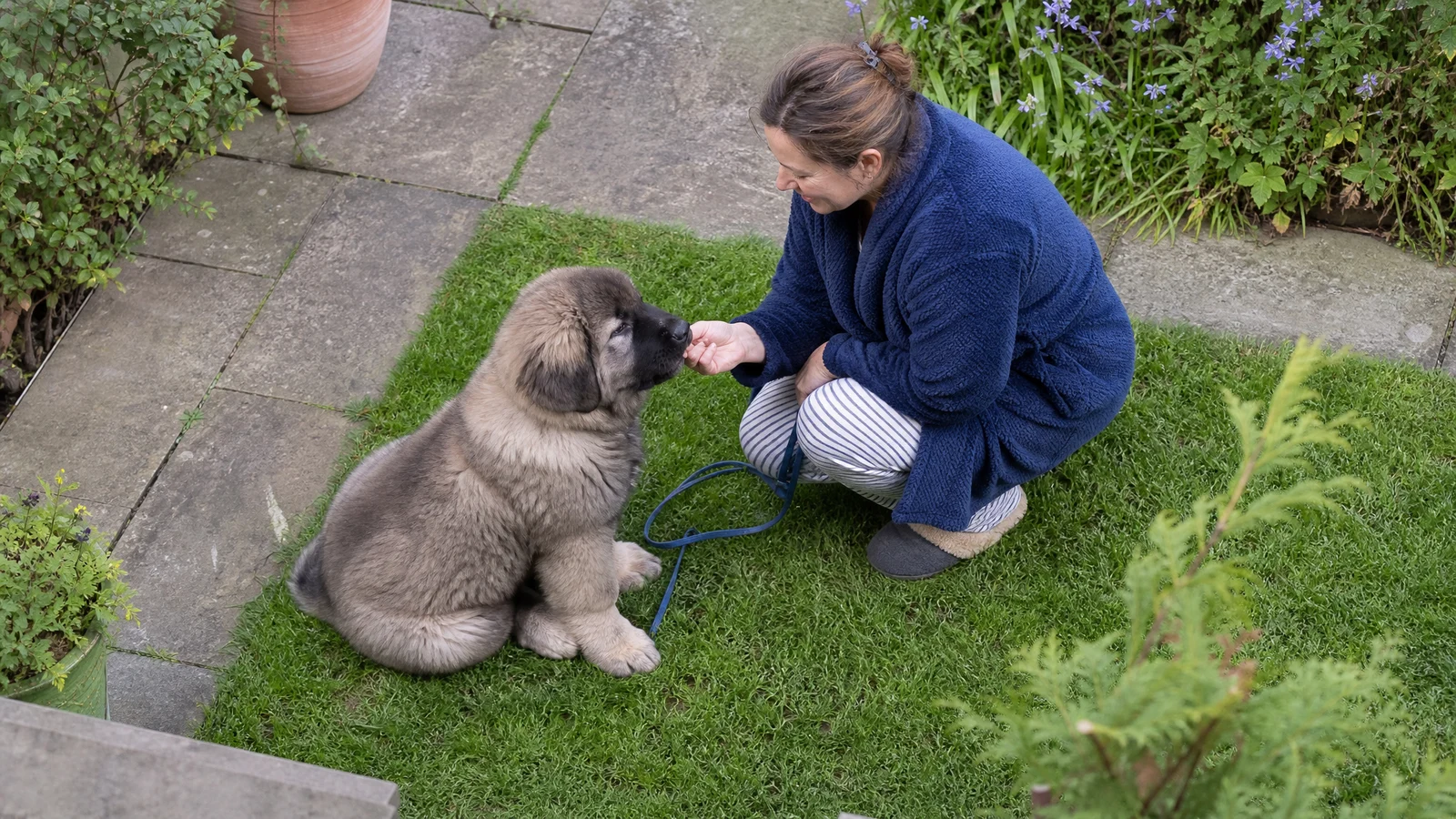 Training basicsHow to Potty Train a Caucasian Shepherd Puppy
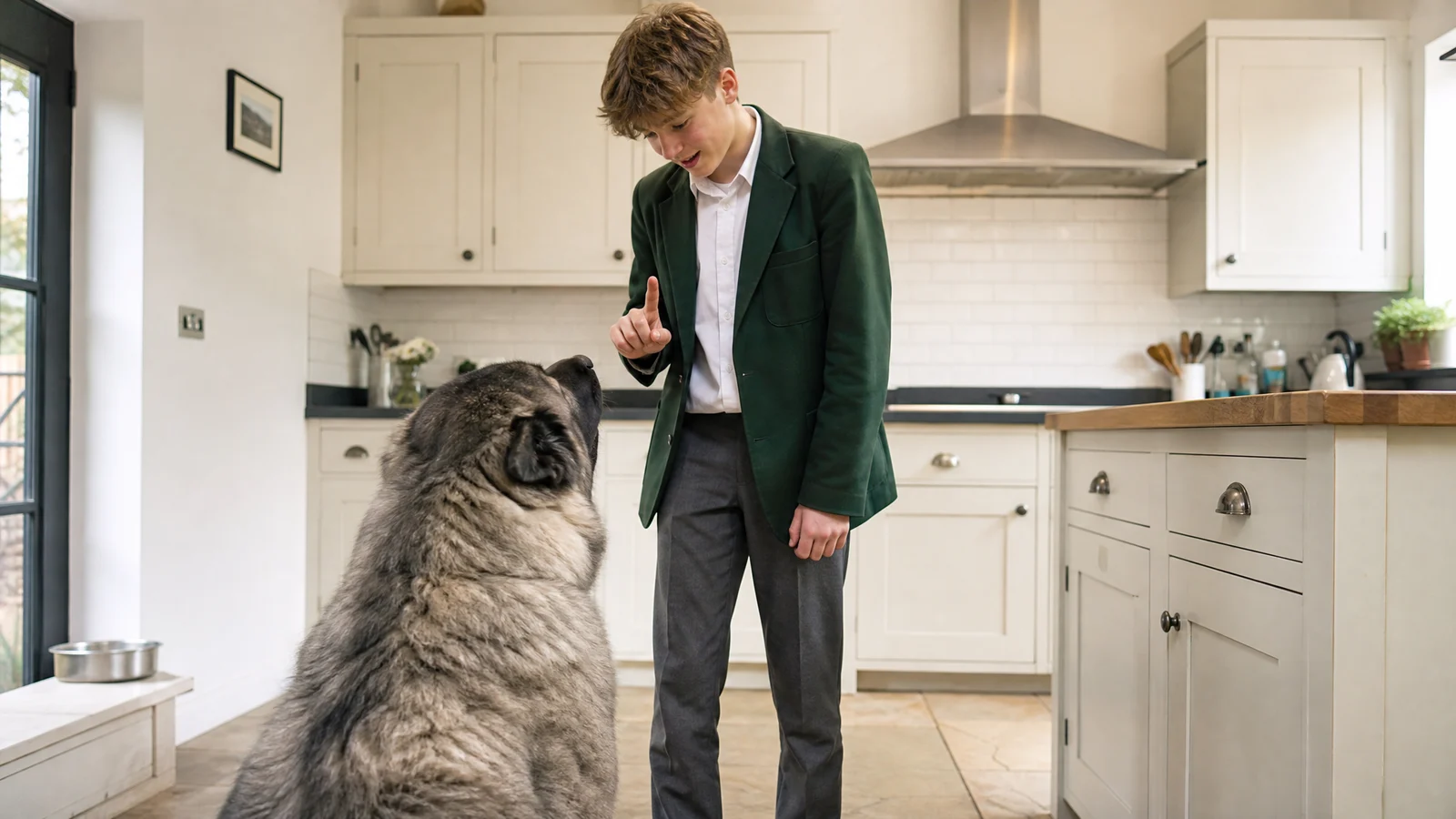 Training basicsA Reward-Based Guide to Training a Caucasian Shepherd