
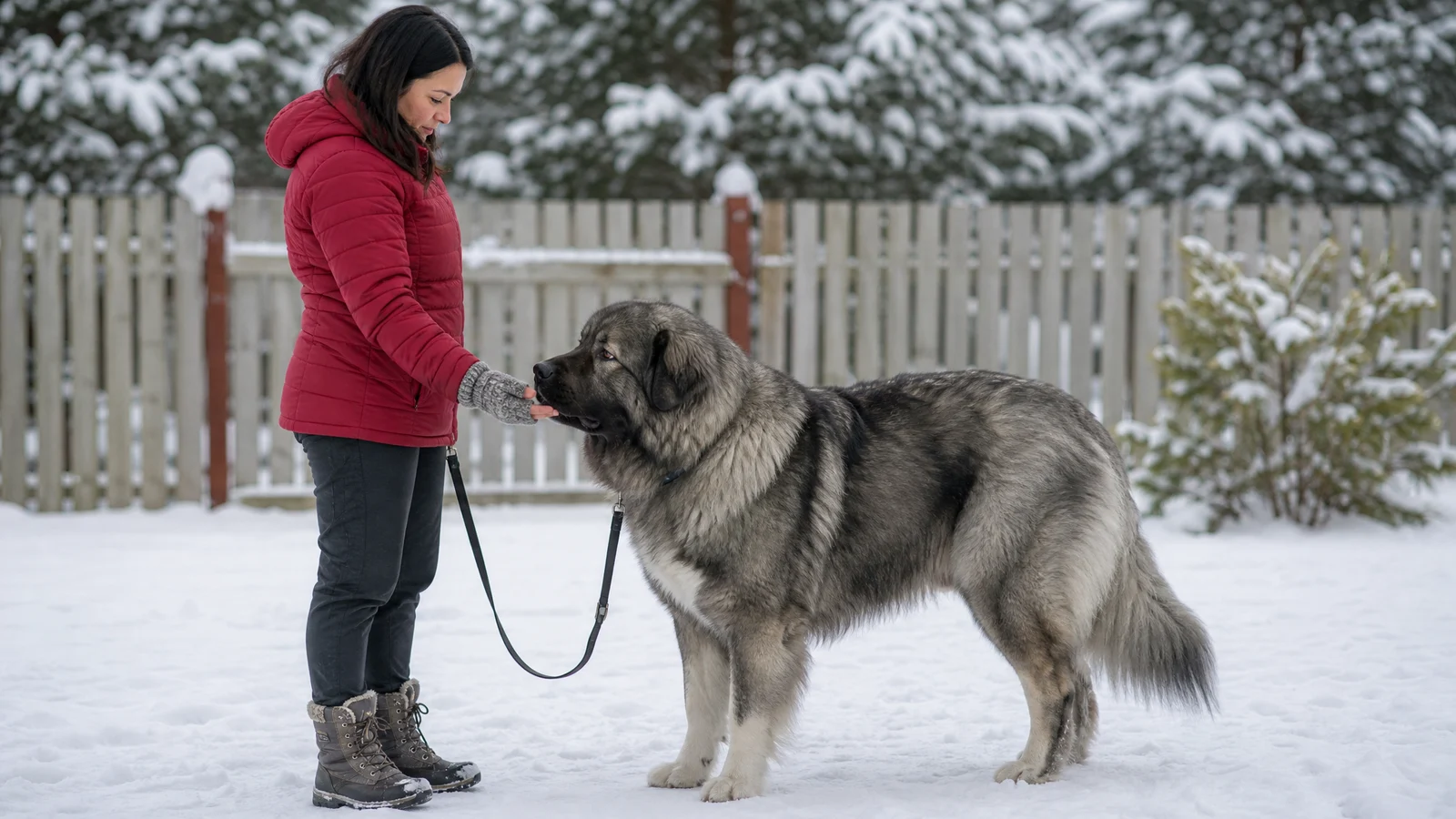
Are Caucasian Shepherd Dogs easy to train? They can learn well, but easy is the wrong promise. This intelligent, independent breed may understand a cue and still pause to judge whether responding makes sense in that setting. Training succeeds when the request is clear, the reward matters, and practice advances in manageable steps that preserve the dog's ability to think.
That answer is more useful than calling the breed stubborn. It separates ability from willingness and helps you change the part of a lesson that is failing. This guide examines temperament as a set of decisions, compares training settings, builds a practical reward menu, and shows when a problem needs professional attention.
Caucasian Shepherd Dog Temperament Has Three Moving Parts
Trainability is not a single quality. We look at three parts: whether the dog understands, whether the outcome motivates them, and whether they can respond while the environment competes for attention. A dog may be strong in one part and unfinished in another, which is why a label such as easy or difficult hides the useful information.
The breed overview describes the Caucasian Shepherd Dog as intelligent and extremely independent. Those traits can exist together. Intelligence helps the dog notice patterns quickly, while independence means they do not automatically treat every human request as the most important event in the room.
This matrix turns a vague training complaint into a decision about the next lesson. Use the observed pattern, not a character label, to choose the adjustment.
| What you observe | Likely training layer | Useful next move |
|---|---|---|
| The dog looks confused in a quiet room | Understanding | Make the cue simpler and mark a smaller success |
| The dog responds once, then leaves | Motivation | Change the reward or shorten the repetition |
| The dog responds indoors but not outside | Reliability | Reduce distraction and rebuild gradually |
| The dog cannot eat or turn toward you | Stress or arousal | Create distance and lower the challenge |
That distinction also protects the training relationship. When you treat an unfinished response as information, you can lower the difficulty and reward a better choice. The dog receives a solvable problem instead of a conflict, and you learn which layer needs more practice.
A pause does not prove defiance. First ask whether the dog has learned this exact version of the skill. Sitting in a kitchen, settling while a delivery arrives, and turning away from movement outdoors may share a cue, but they place very different demands on attention.
Independent Temperament Changes the Training Bargain
The breed standard calls the Caucasian Shepherd Dog spirited, intelligent, strong-willed, and headstrong. In practical training, that description points toward a dog who benefits from predictable consequences. The cue should lead to an action the dog understands, followed by something they value.
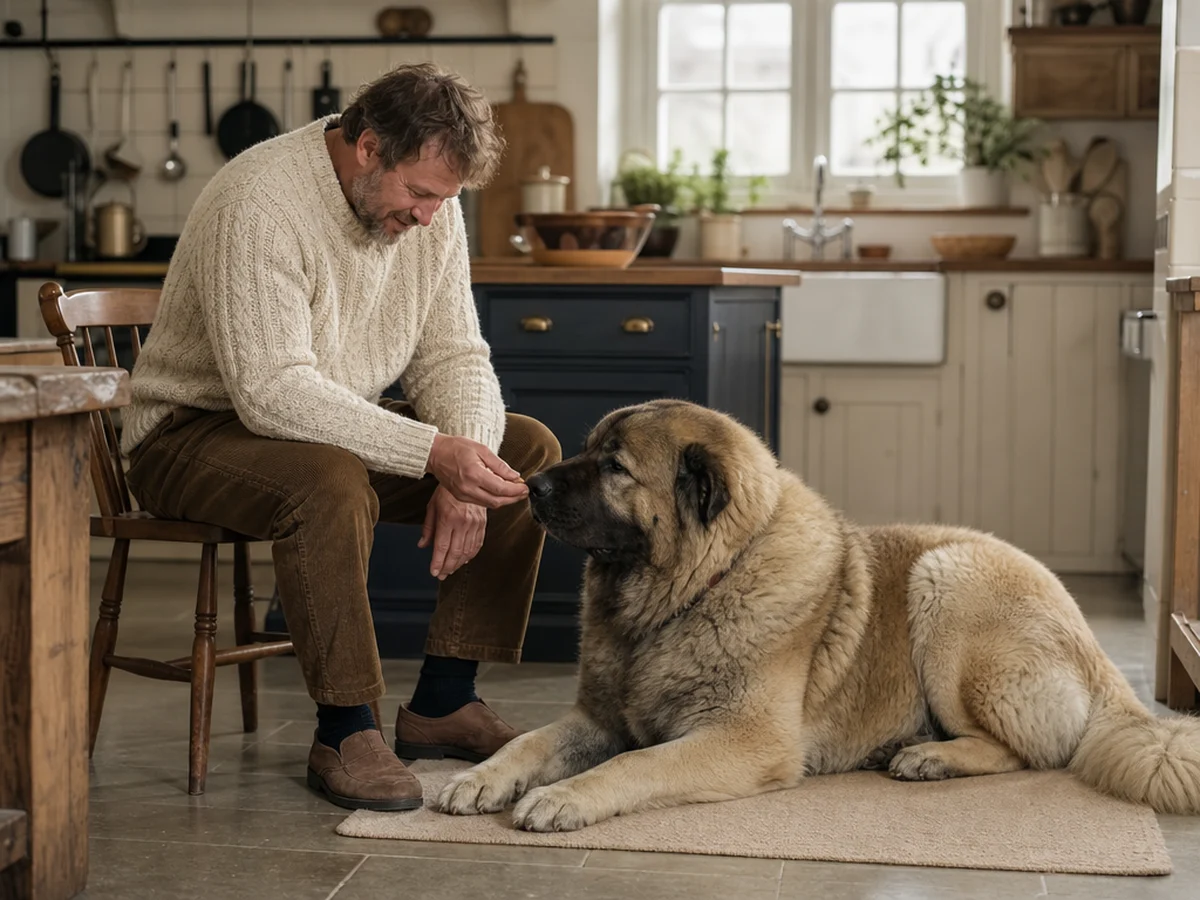
Repetition without a purpose can lose its meaning. If the dog has already placed all four paws on a mat and received no clear release, asking for the same response again may create uncertainty rather than fluency. One good repetition, a reward, and permission to move can teach more than a string of requests whose ending is unclear.
Structure matters, but structure is not pressure. With reward-based teaching, food, play, or praise valued by the dog strengthens the response that earned it. The handler still decides when practice begins, what behavior earns the reward, and when the session ends.
Predictability becomes especially important when the dog is deciding whether to remain engaged. If the reward sometimes arrives for a completed response and sometimes appears before the cue, the dog may begin watching the food instead of listening. Keep the order clear: cue, response, marker, reward, and release.
Build that bargain with four consistent pieces. Their order helps the dog predict how a successful repetition will end.
- Use one cue for one action, and avoid repeating the word while the dog is deciding.
- Mark the exact response you wanted, then deliver the promised reward promptly.
- Release the dog clearly so they know when the task is over.
- Stop while the dog is still engaged, then return to the skill in another short session.
This pattern respects independence without making every request negotiable. The dog can choose to respond, and your setup makes the useful choice easy to recognize and worthwhile to repeat.
Trainability Depends on the Setting
A learned response changes when the setting changes. Begin where the dog can notice you without giving up something more urgent. Change a single training variable, whether it is distance, movement, duration, or location. If several features shift together, a missed cue does not reveal which one exceeded the dog's current skill.
Quiet Indoor Trainability
Use the calm room to teach the basic language. A marker tells the dog which movement earned the reward, and a release word ends the exercise. Practice simple orientation, following your hand, settling on a mat, and moving with you before expecting those behaviors around outdoor activity.
Keep the reward easy to reach and the floor clear enough for a large dog to turn comfortably. The goal is not rapid performance. Look for a relaxed body, a quick return after each reward, and growing confidence about what the cue predicts.
Outdoor Trainability
Outdoors, begin farther from paths, gates, people, and dogs than you think you need. Reward voluntary glances toward you before asking for a formal response. Those check-ins show that the dog can divide attention, which is the foundation for any cue in a busy place.
If the dog fixes on movement, stops taking food, or holds their body rigidly, the lesson has exceeded what they can manage there. Create space without drama and resume only after the body softens. Distance is not a failure. It is the tool that makes learning possible.
Household Trainability
Daily routines are the bridge between a quiet exercise and real life. Ask for a pause before a door opens, a station while food is prepared, or a calm stand for brief handling. Each action has an obvious purpose, so the dog learns that responding helps the household move smoothly.
Our broader guide to how to train connects these skills to management, social situations, and exercise. Use it when the issue spans several settings rather than one unfinished cue.
Rewards That Suit Caucasian Shepherd Dog Temperament
A reward is defined by its effect, not by what the handler intended. If praise does not bring the dog back for another repetition, it may be pleasant but weak in that moment. Prepare several options and let the dog's next choice show which one worked.
Food is useful because it is quick and precise, but it is not the only option. Access can be powerful for an observant dog. After a rewarded check-in, permission to sniff, move to a favorite resting place, or investigate a safe area can make cooperation part of the activity rather than an interruption.
Match the reward to the difficulty. A familiar response in the kitchen may earn an ordinary piece of food. Turning away from an interesting sight outdoors may deserve a better food reward plus permission to continue walking. The harder choice should not pay less than the easy one.
Rotate rewards without making the outcome mysterious. The dog should still understand exactly which response made access possible.
- Use small food rewards for quick repetitions and precise movements.
- Use a brief toy game when play helps the dog return to you instead of becoming more aroused.
- Use sniffing or forward movement after leash slack and voluntary orientation.
- Use calm contact only when the dog actively seeks it and remains loose.
Do not lure forever. Once the dog follows the movement reliably, show the empty hand, mark the completed response, and take the reward from another hand or pocket. The cue then predicts the behavior, while the reward follows it.
Temperament Problems or Training Problems?
When progress stalls, identify the weak layer before changing the method. A training problem is usually specific and predictable. The dog may need a clearer cue, a stronger reward, more distance, or an easier version. A welfare or behavior concern is more likely when the change is sudden, broad, or paired with signs of distress.
Weak foundations often look like selective hearing. If the dog responds only when they see food, rebuild the marker and reward after the response. If they respond only in one room, practice in a second quiet place before adding activity. If a cue has been repeated many times, choose a fresh word and teach it as new.
Stress changes the picture. A dog who cannot disengage, recover, or accept a familiar reward is not ready for a harder repetition. Increase distance, end the exposure, and plan a calmer version. For persistent fear, escalating reactions, or difficulty keeping people and animals safely separated, consult a qualified reward-based behavior professional.
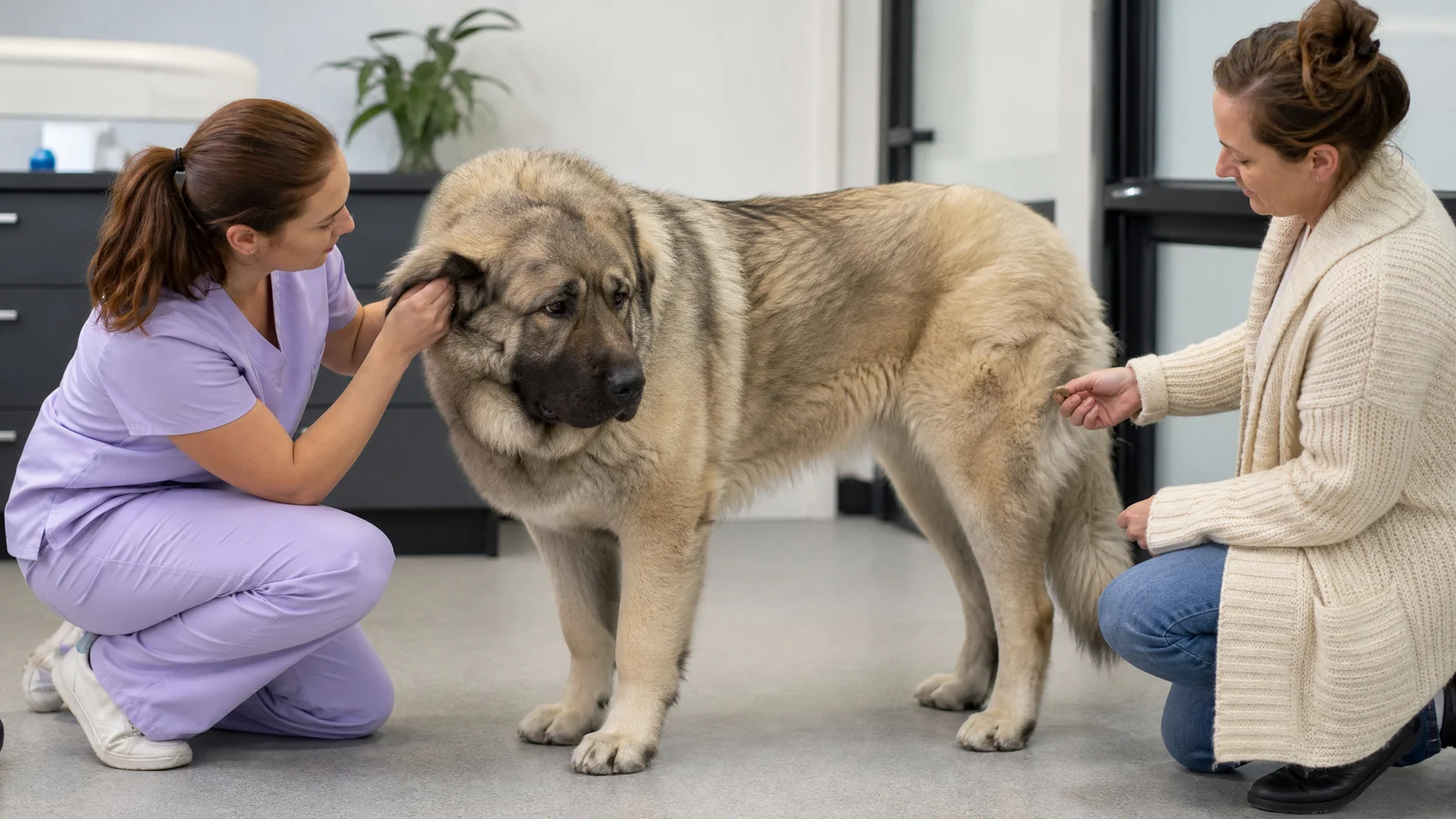
A sudden change in attention, movement, sleep, appetite, or tolerance for handling deserves veterinary attention rather than more drilling. Regular vet visits also help establish what is normal for your dog, making a meaningful change easier to recognize.
For daily skills that depend on routine and supervision, the Caucasian Shepherd potty training guide shows how consistency can carry more of the lesson than repeated cues. The same principle applies here: arrange success before asking for proof.
Caucasian Shepherd Dog Temperament Progress
Useful progress is not blind speed. Progress appears when the dog understands the shared routine, turns toward you more readily, and recovers after noticing something important. Reliability grows through many manageable choices, not through one demanding test.
Watch for responses that transfer from one quiet room to another, a softer body when a cue is given, and voluntary check-ins before you ask. Also notice whether the dog can accept a reward and return to a calm activity. Those changes show that learning and emotional regulation are developing together.
Seek help when the dog repeatedly cannot recover at a workable distance, when reactions intensify despite careful management, or when anyone's safety depends on a skill that is not yet reliable. A veterinarian can address sudden physical or behavioral change, while a qualified reward-based professional can design a controlled training plan.
The Caucasian Shepherd Dog is trainable, but their temperament asks the handler to be precise. Teach the meaning, make the outcome worthwhile, and raise the challenge only when the current version looks easy. That approach turns independence from a verdict into information you can use. It also gives every future lesson a clear question: which training layer should become easier next?
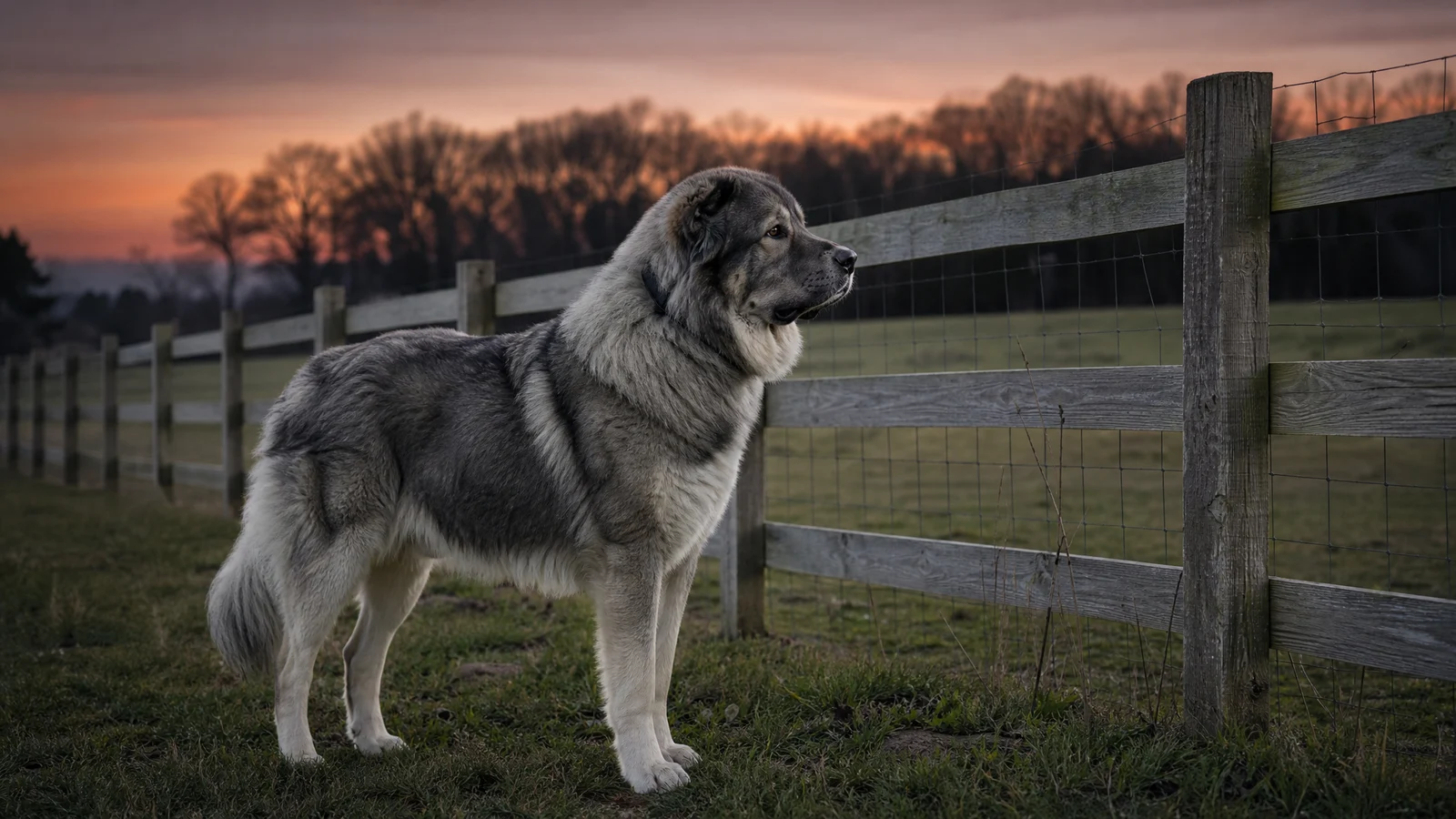 BehaviorIs My Caucasian Shepherd Angry or Just Alert?
 Puppy trainingTraining a Caucasian Shepherd Puppy Who Grows Over 100 Pounds
 Exercise and jobsCalm Outdoor Jobs for a Caucasian Shepherd Livestock Guardian