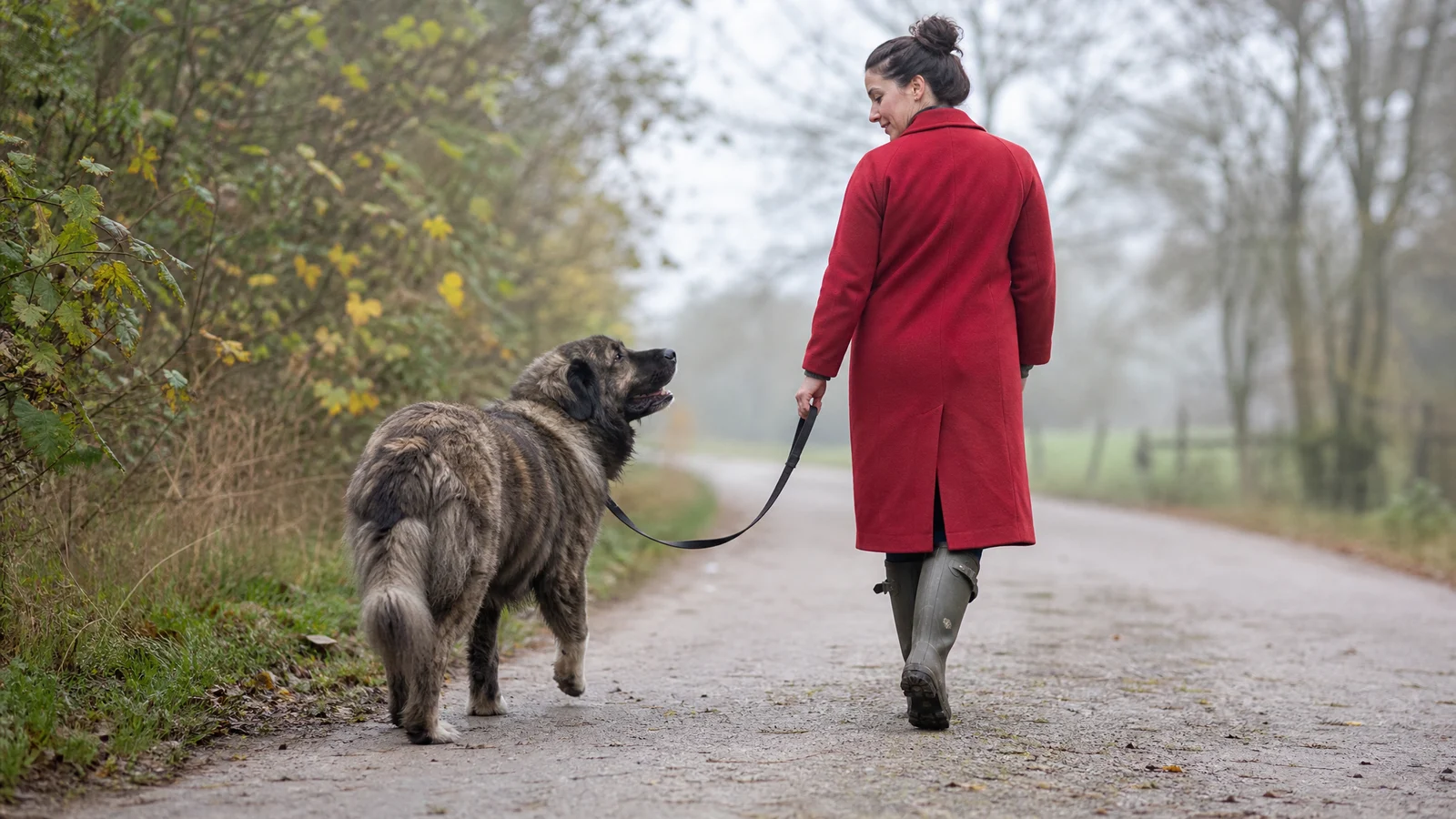
Three leash patterns matter on a walk with this breed: steady drag, a sudden lunge, or a silent freeze and stare. Identify the pattern first, because each one changes the distance, timing and response you need.
The reason is the dog on the other end. This is a large guardian who is very suspicious of strange people and dogs, and the breed should be on leash when walked. At 99–170 lb, a dog who has learned that pulling works can haul you toward the very person or dog they want to confront. We have trained this breed for many years, and the plan below follows how they actually learn.
We'll walk you through why they pull and lunge, then the loose-leash basics, what to do when a stranger or dog appears, the freeze and stare, and the gear that keeps you in control, ending with the signs of progress and when to call in a professional.
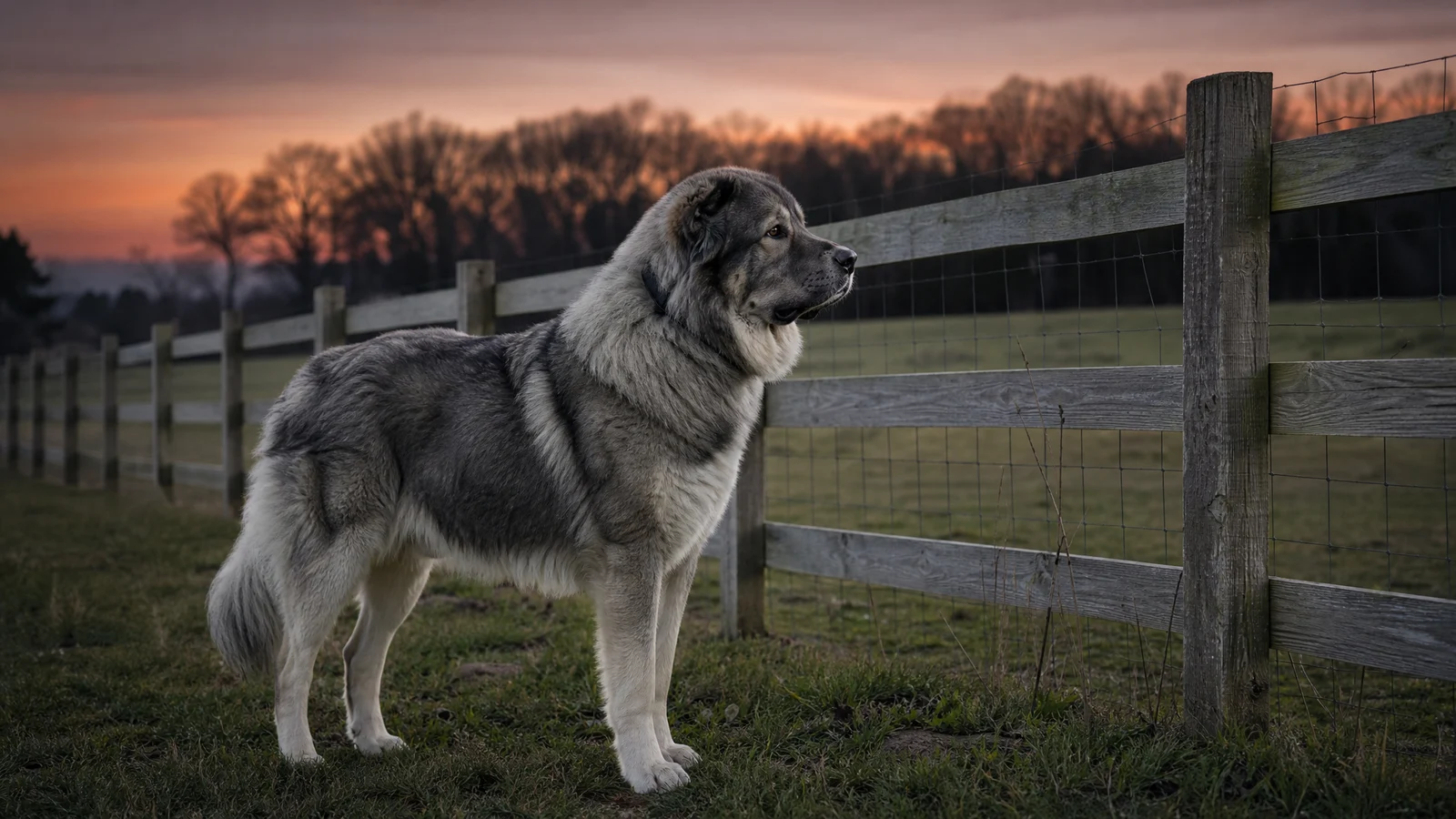
Caucasian Shepherd Dog Leash Training
On a typical walk you will see one of two patterns, and they have different causes. Knowing which one is in front of you tells you what to change first.
The Steady Forward Drag
This is the dog who leans into the harness from the first step and keeps the leash tight for the whole block. Every time you follow a tight leash, the dog learns that tension gets them where they want to go, so they repeat it. Behavior that pays gets repeated.
Size makes the habit feel worse than it would in a smaller dog. The breed is slow to mature and headstrong, so a young dog may have the strength to pull long before they have the judgment to stop.
They are also extremely independent and intelligent, which means they will test whether your rules are real. Our article on training a strong-willed Caucasian Shepherd explains why patience pays here.
Sudden Surges
The second pattern is a loose leash that snaps tight in an instant. Something has caught the dog's attention: a person, another dog, an unfamiliar noise.
This is guardian drive at work. The breed is highly protective of family and property, and breed ratings put their watchdog nature at the top of the scale, 5 of 5.
Some surges are plain excitement or curiosity about a scent. The ones aimed at people and dogs are different, because the dog wants to close the distance and investigate or confront. Those need the distance work covered later, not just a better walking position.
Caucasian Shepherd Dog Lunging
A stranger appears at the far end of the sidewalk. Your dog's head lifts, their body goes still, and the leash has not moved at all. This is the moment that decides the outcome, well before any barking or lunging starts.
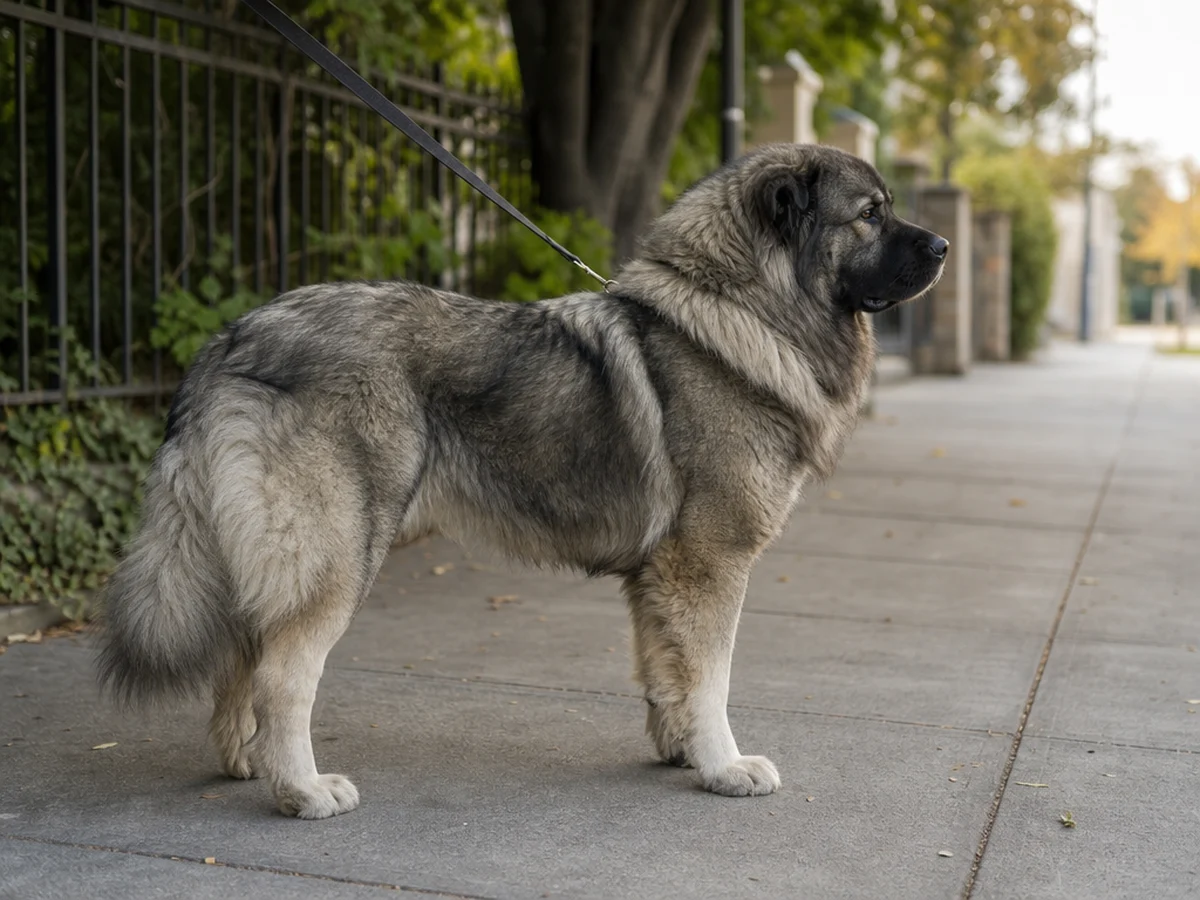
The key term is threshold, the distance at which a dog can still notice a trigger and stay calm. A helpful picture is a bubble around the dog.
Outside it, they can eat, look around, and think. Inside it, they begin to react. Your job is to keep the bubble from touching the trigger.
For this breed the bubble is large. Breed ratings put both friendliness toward strangers and getting along with other dogs low, at 2 of 5 each.
Mild dog aggression is considered normal for the breed, but handlers are still expected to keep their dogs under control. Managing distance is your side of that bargain.
Spot the Early Signs
Lunging is the loud end of a quiet sequence, so learn the beginning of it. Watch for sudden stillness, weight shifting forward over the front legs, and a fixed, hard stare with a closed mouth. A stiff, high tail or raised hair along the shoulders is another early sign.
Your dog may also refuse treats they normally take eagerly. Treat all of this as information, not a verdict. It tells you the dog is at the edge of the bubble and needs you to widen it.
Create Distance and Reward Calm
At the first early sign, turn away with a cheerful, consistent cue. Keep a steady pace, and mark and pay when your dog follows.
Duck into a side road, a driveway, or around a corner so the trigger drops out of sight. Leaving is not failure. It stops the dog from rehearsing the stare and lunge.
When turning is not possible, scatter a handful of treats on the ground. Sniffing lowers the head and breaks the stare.
Start while the trigger is still far off, not after the dog has locked on. Ask other people not to approach, since you owe nobody an introduction.
On later outings, feed steadily while the trigger is in view and stop when it disappears. Over many sessions the stranger or dog starts to predict food from you. Move closer a little at a time, and only if your dog stays relaxed.
If They Still Lunge
Even good plans fail sometimes. Turn and walk off at a steady pace until your dog is outside the bubble again.
Stay quiet and relaxed, since lecturing or tugging only adds tension. Wait for the stiffness to drain and the breathing to settle, then offer a treat for any glance toward you.
Head home afterward. A rest on a calm mat, as in our Caucasian Shepherd crate calm guide, helps your dog decompress.
Note the time, the spot, and how far off the person or dog was at the first sign. Patterns show up quickly, and one bad corner is a route you can change.
Leash Training for Freezing
Some Caucasian Shepherd Dogs never lunge. They go still, lock onto a person or dog across the road, and may follow with a low growl or bark. This section covers what that stare means, a cue that gets you out of the moment, and how to recover afterward.
The stare is information gathering from a breed with keen senses that is very suspicious of strange people and dogs. Any change in their surroundings can bring warning barks and growls, particularly at night.
A dog who freezes is deciding whether the stranger matters. Staring them down or hurrying them along adds pressure when they need room to think.
Teach a turn-away cue while nothing is happening. Say a cheerful cue such as "this way," step back the other way, and pay with a treat when they swing around to follow.
Practice on quiet streets until they turn happily. Then use it at the first stiffening, before the stare has set.
If they do bark, increase distance first and ask nothing difficult. Walk off at a steady pace, stay relaxed, and wait for their body to soften.
Offer a treat for any glance toward you. A calm recovery matters more than a perfect cue, because each one teaches that strangers pass and you handle it together.
Loose-Leash Response
Watch a dog drift half a step ahead and you can see the whole lesson about to happen. The leash is a moment from tightening, and what you do next decides what the dog learns. A loose leash simply means the line hangs in a relaxed curve because staying near you pays better than hurrying ahead.
Begin in a quiet room or hallway, with soft treats in a pouch at your hip. Pick a marker word, such as yes, which tells your dog the exact instant they have earned food. Short, rewarding sessions work better than long ones with a strong-willed dog.
Reward the Spot Beside You
Choose one side, left or right, and keep it for every handler. Food should always arrive at your leg, level with the dog's shoulder, never out in front of them, or you will be paying for the lean forward.
- Take a single step with your dog beside you, say your marker, and feed at your hip.
- Take two steps and pay, then three, stretching the gap a little each time.
- If your dog moves ahead, stop and wait. Pay the instant they turn back to you.
- Once the position holds, pay less often and unpredictably, and add life rewards such as permission to sniff a good spot.
Stop When the Leash Tightens
The rule is simple: a tight leash means the walk pauses. Stop walking as they pull, stay still, and never haul the leash back. When the line slackens or your dog looks at you, mark and pay, then move on.
Consistency is the whole point. Shelter guidance is to stop every single time, because stopping only most of the time teaches a dog that pulling still pays now and then. With a dog this heavy, a calm turn in the other direction is also kinder to your shoulders than a standoff.
Build Distance and Time
Move through settings in steps: a hallway, the fenced yard, the driveway, a quiet street at an off-peak hour, and only then busier places. The breed is described as low energy with good endurance for walking, so you do not need marathon outings. Several short, calm walks teach more than one long, stressful one.
If your dog stops taking treats or leans hard into the harness, the setting is too exciting for their current skill. Go back one level and rebuild.
Caucasian Shepherd Dog Walking Gear
A dog in the 99–170 lb range can overpower weak equipment and an unbalanced handler alike. This section covers the harness, the leash and how you hold it, because handling matters as much as the product you buy.
Use a well-fitted harness with a front clip, plus a flat collar for ID tags. Choose a fixed-length leash that is sturdy, with a strong clasp and a handle that feels good in your hand. Retractable leashes give a pulling dog more room to practice, so leave them at home.
Common advice says to keep a giant dog on a short, tight leash for control. A tight leash is exactly what you are trying to teach them to avoid, and tension tends to raise arousal.
Hold a relaxed loop instead, with your hands close to your body, your feet planted and your weight balanced. Stay calm and wait. Stop walking when they pull, and never haul the leash back toward you.
Because the breed should be leashed whenever walked, make sure everyone who handles your dog can manage their strength safely. If a family member cannot hold the dog calmly, they should practice in quiet places first, with rewards in hand.
When Leash Training Needs Help
Progress with this breed shows up as small gains long before it shows up as a perfect walk. Judge by the trend across several weeks, not one outing. Here is what improvement looks like and when to ask for help.
- The leash hangs loose for longer stretches, and your dog checks in with you without being asked.
- They recover faster after noticing a stranger or another dog, and their body softens sooner.
- They stay calm at closer distances than they could weeks ago.
- You turn away at the first early sign, and they follow happily.
Consistency drives these gains, so every handler should stop whenever the leash tightens. Professional support is appropriate when lunging worsens, you cannot safely control your dog, or there is any bite history. Choose someone who uses reward-based methods.
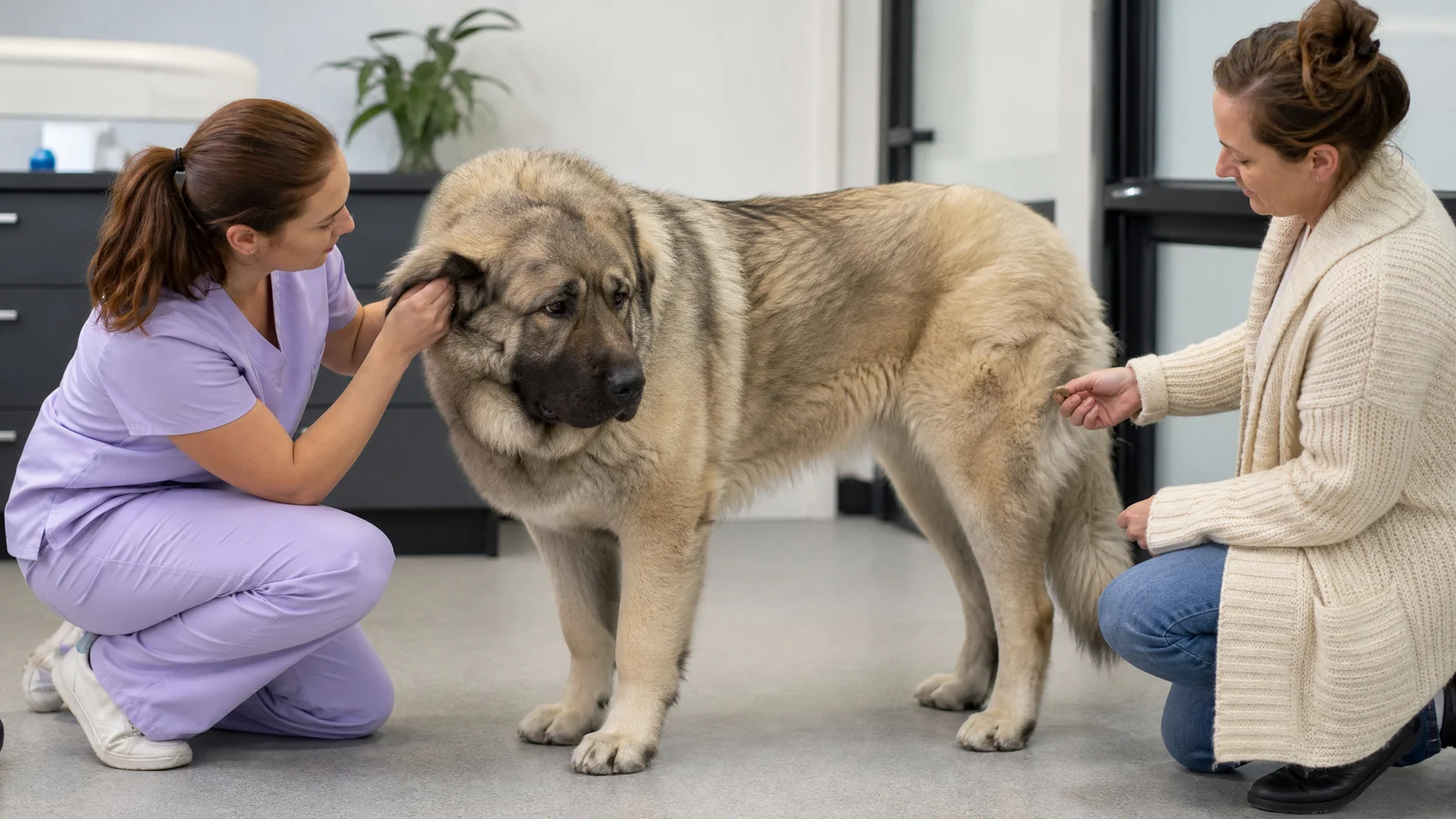
Mention any sudden resistance to walking or signs of discomfort to your veterinarian, and keep regular vet visits on the calendar. This powerful guardian learns best through patient repetition, and professional support is part of good handling, not a failure.
 Training basicsStrong-Willed and Smart: Training a Caucasian Shepherd
 BehaviorIs My Caucasian Shepherd Angry or Just Alert?
 Puppy trainingTraining a Caucasian Shepherd Puppy Who Grows Over 100 Pounds