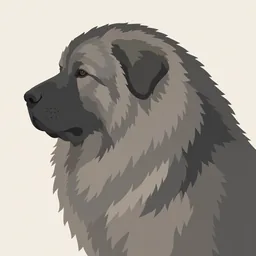
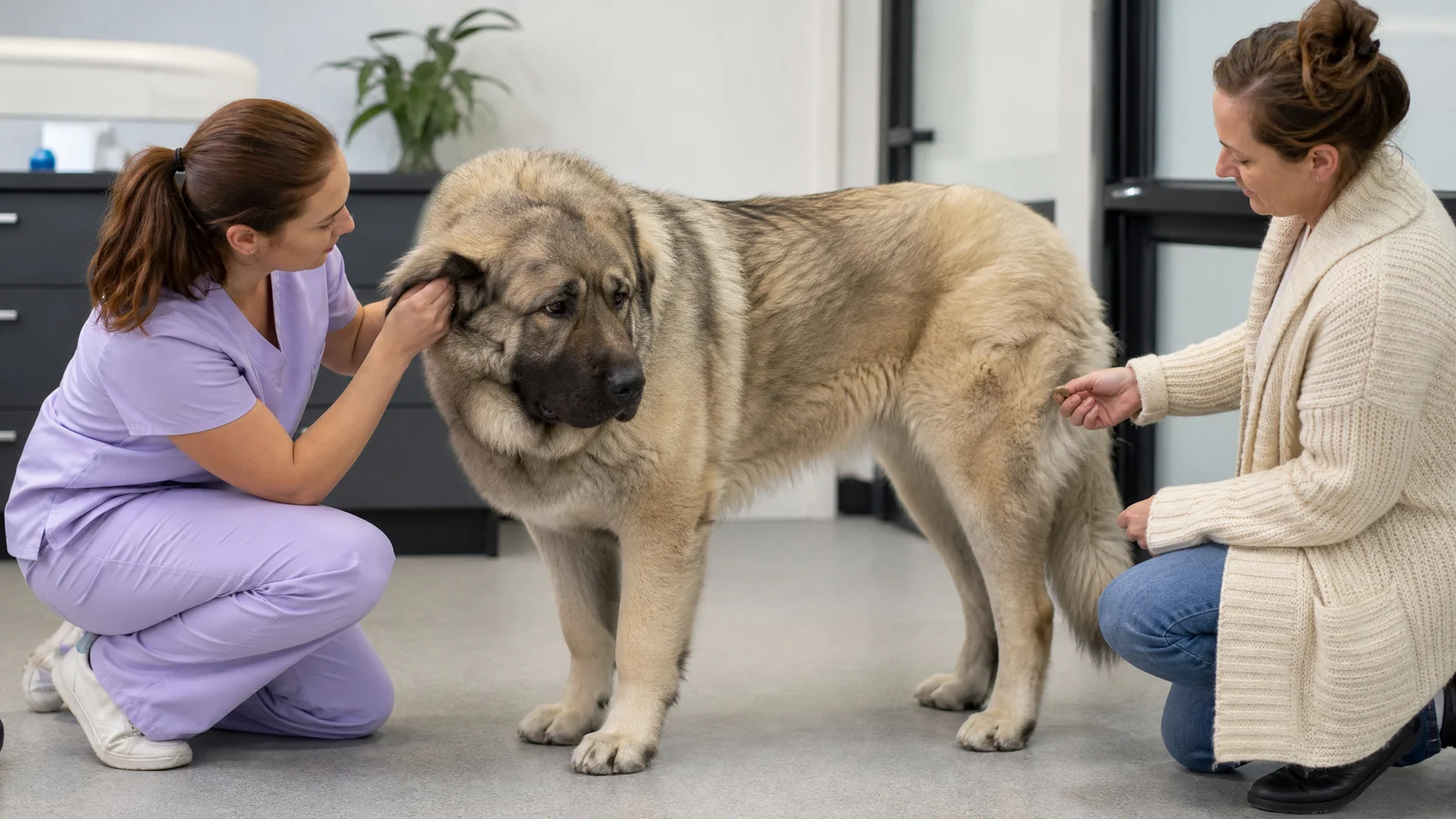
Some Caucasian Shepherd Dog owners walk a calm, solid dog down the sidewalk, then stand back while a guest or a veterinary technician runs hands over the paws and ears. Others hold the leash of an adolescent already heavy enough to haul them along, who ignores every cue and stiffens over a bone. The difference rarely comes from the dog's nature. It starts in the first weeks, when the puppy is small enough to guide with one hand.
We have trained this breed for many years, and the early weeks matter even more than most people expect, because this is a slow-maturing dog and shortcuts linger. We'll walk you through the first days at eight weeks and the socialization window, then leash manners, the fast-growing months from four to six, the headstrong teenage stretch and the usual trouble spots, and finally the finished dog of 99 to 170 pounds.
Caucasian Shepherd Dog Puppy Training Basics
At eight weeks you are holding a fluffy, clumsy animal who will become an XLarge adult standing 23 to 30 inches. Habits work a bit like concrete. They are easy to shape while wet and very hard to reshape once set, so every routine you build now is really a routine for the adult.
The breed is described as extremely independent and intelligent, and obedience can prove difficult but not impossible. Treat that as a planning note. Expect to repeat yourself patiently, keep sessions to a few minutes and pay well. The breed standard adds that these dogs are slow to mature and headstrong, which is exactly why the first routines carry so much weight.
House Routine
Pick one consistent outdoor spot and walk your puppy there on a leash each time. Stand quietly, and as they begin to go, repeat a short cue word so they connect that word with the act. Reward the instant they finish. Plan trips after naps, after meals, after play and at bedtime.
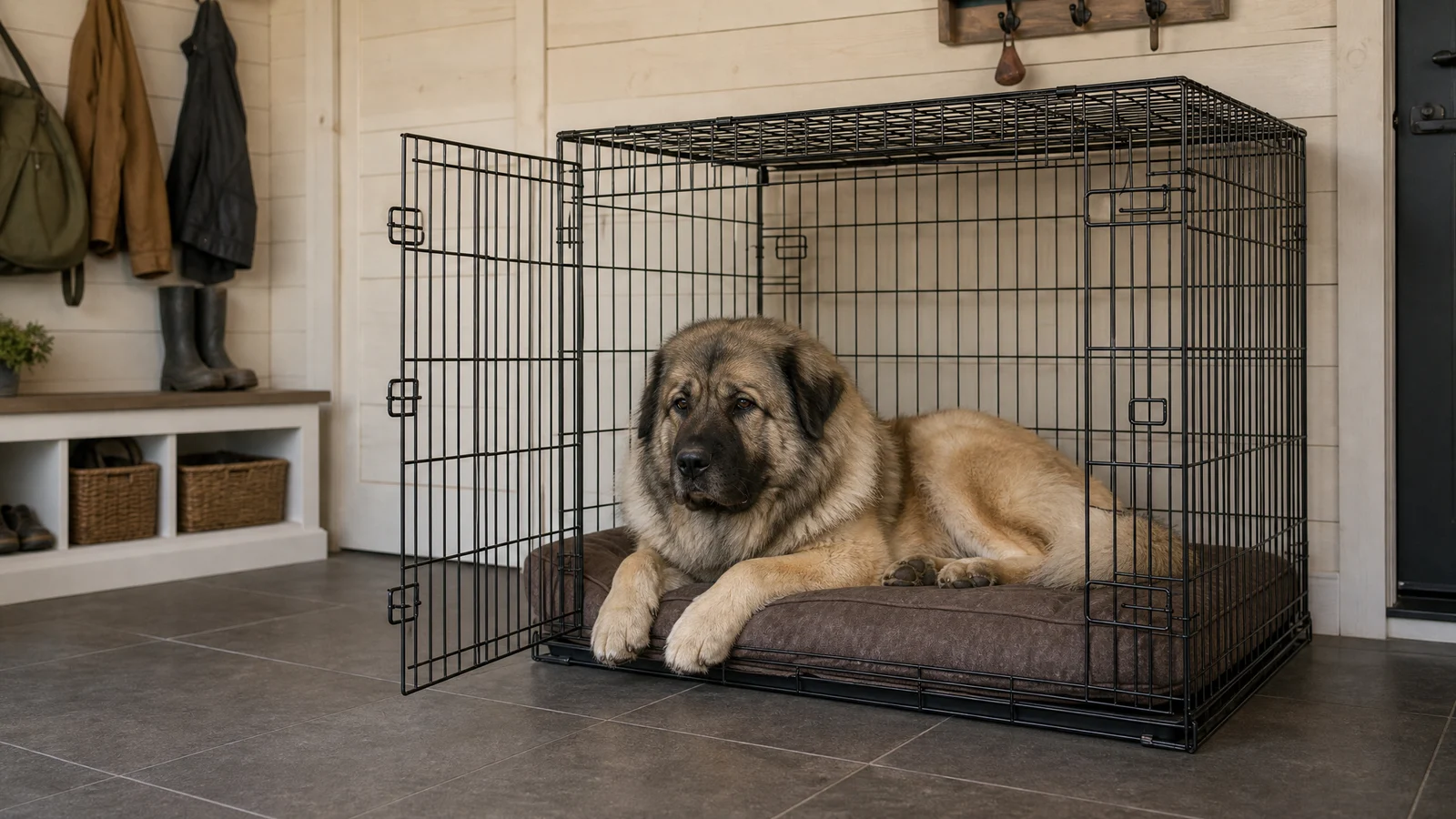
Use a crate or pen whenever you cannot watch. These dogs are usually fairly quiet in the house, and a puppy who learns that indoors means calm and the yard means business is easy to live with at full size.
Name and Handling
Say the puppy's name once, and when they look at you, deliver a treat. Repeat in short bursts through the day until the head turns every time.
Handling starts the same way. Touch a paw, lift a lip, check an ear, then treat and release. Keep each touch to a few seconds and stop before the puppy squirms. A dog this large will need exams, nail trims and brushing for a decade or more, and our guide to accepting grooming and vet handling builds on exactly these habits.
Settling Alone
Teach a settle on a mat while you sit nearby, rewarding the puppy for lying down and staying relaxed. Then step away for a moment and return before any fuss starts. Stretch the time slowly.
A chew on the mat helps. A giant puppy who has never practiced being calm without you will turn that into a problem once they are too big to carry out of the room.
The Socialization Window in Puppy Training
Socialization means calm, pleasant exposure to the ordinary world while the puppy is young and still open to new things. For this breed the aim is not a dog who loves everyone. The breed standard says socialization and patient training can temper the characteristic suspicion of strange people and dogs, resulting in a mature dog with good judgment. Your target is a dog who finds ordinary life boring.
People
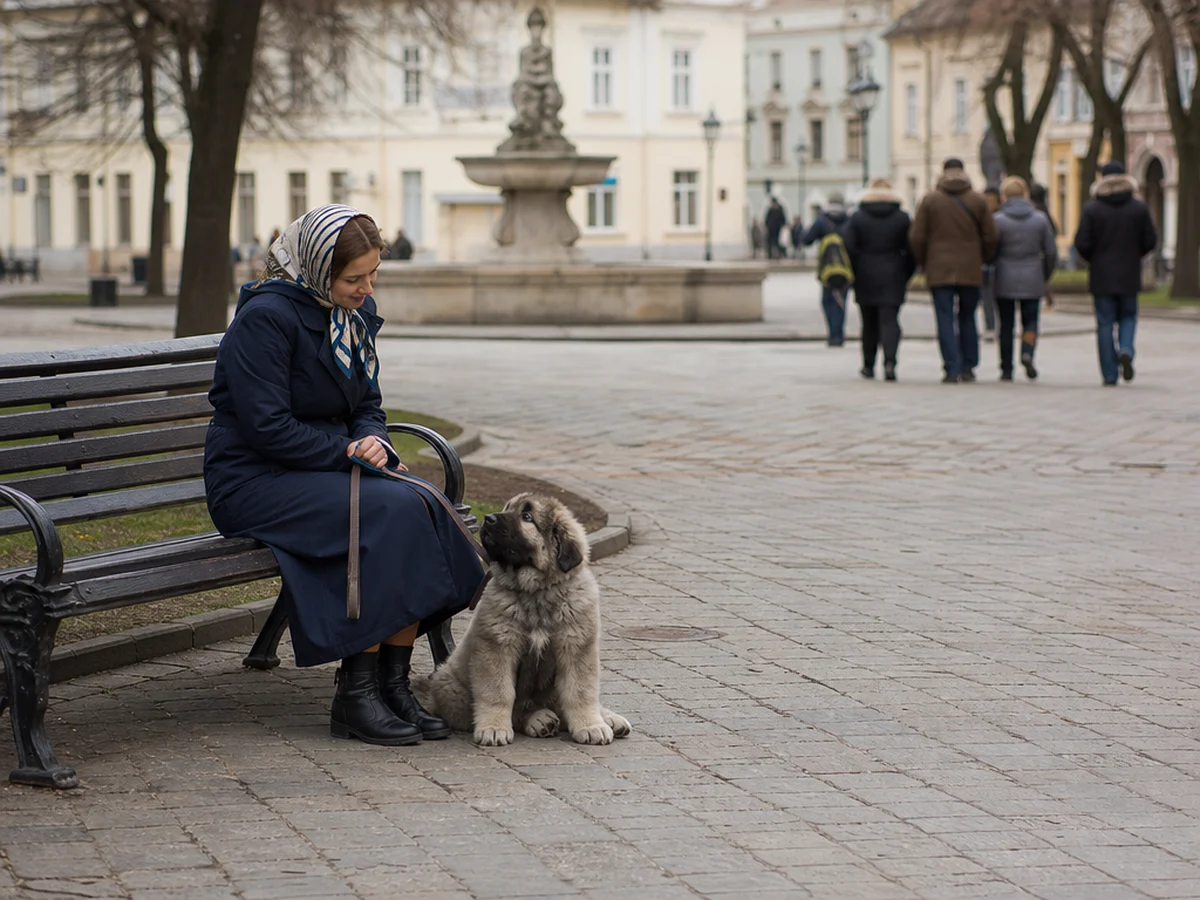
Caucasians are reserved with strangers and strongly attached to family, so invite calm visitors who ignore the puppy until the puppy approaches. Let the guest drop a treat nearby rather than reach over the head. Vary the cast: different ages, hats, uniforms and voices.
Never push a greeting. If the puppy backs away, give space and let curiosity win. Practice the door routine early too. The doorbell rings, the puppy goes to the mat, the guest comes in, and treats arrive for staying put.
Dogs
This is a breed that generally does best with few dog friends, and the standard calls mild dog aggression a normal trait while still expecting handlers to keep control. So choose a small number of calm adult dogs you know well and keep meetings short and relaxed.
Parallel walks at a comfortable distance teach more than nose-to-nose greetings. Skip dog parks, where you cannot control who runs up.
Places
Take the puppy on car rides that end somewhere pleasant, across different floor surfaces and past household noises like the vacuum and the dishwasher. Stop by the clinic just to collect a treat. Your veterinarian sets the vaccine schedule, so ask when public ground becomes safe, and keep regular checkups on the calendar.
Because this is an intelligent, independent guardian, plan every outing around containment: a fenced yard for play and a leash whenever you walk.
Puppy Training for Leash and Size Manners
This is the section to front-load. A puppy who pulls, jumps or barges through doors is a nuisance at this size, and by adolescence can be a danger to whoever holds the leash. Manners that feel optional now must be dependable before the dog outweighs you.
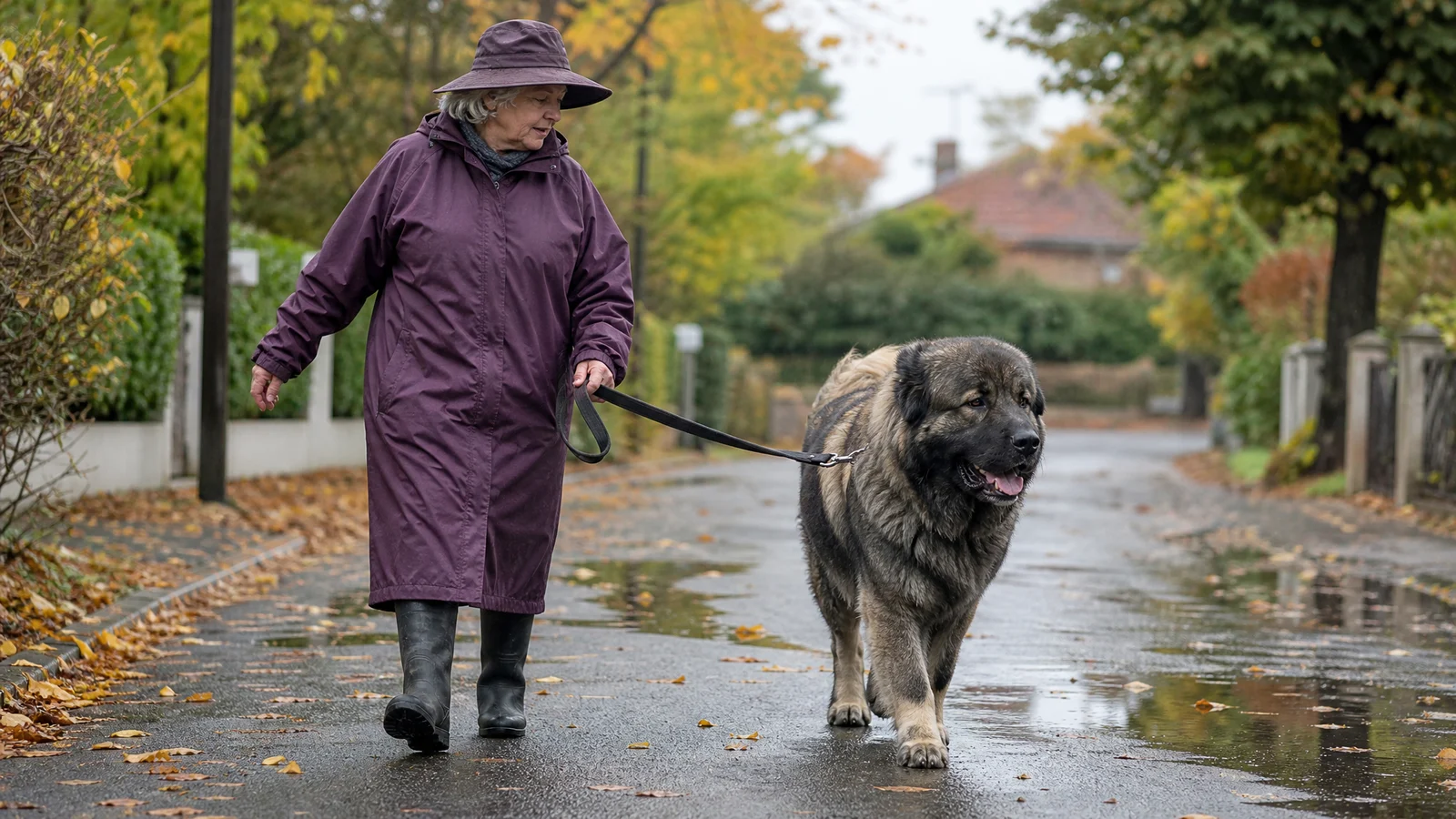
The idea behind loose-leash walking is to teach the dog that not pulling is the fastest way to get where they want to go. Build it in this order:
- Reward the puppy for standing or walking beside you indoors, where nothing competes for attention.
- Move to the yard and pay every few steps for a slack leash.
- If the leash goes tight, pause and stay put. Once it loosens, praise and move forward.
- Add distractions one at a time, and raise the treat value as they get harder.
Greetings follow the same logic. Reward four paws on the floor and ignore the leap. Have them hold a wait at every door, gate and car opening until you give the release. Ask everyone in the household to follow the same rules, because a puppy who gets rewarded for jumping by one person will jump on everybody.
Body control matters just as much as walking. Teach the puppy to stand still on a mat while you run your hands down the body, and to step back when you ask. A dog who understands those two cues can be steered by a small person.
Puppy Training From Four to Six Months
Large puppies often outgrow their coordination, so what the puppy knows can run ahead of what a gangly body can manage. This is the time to make cues reliable rather than add new tricks. Keep sessions brief, practice in several rooms and outside, and stop while the puppy still wants more.
- Build a sit, a down and a mat settle that hold for a minute or more before the puppy gets paid.
- Practice "leave it" with a treat under your hand, then with dropped items, working toward things the puppy truly wants.
- Work on recall in a fenced space. Battersea points out that dogs need a strong, reliable recall before any off-leash time in public, and for this breed public off-leash time is rarely wise anyway.
- Ask for a wait before every meal and every door, so impulse control becomes part of daily life.
Playfulness is modest in this breed, so a tug game may not be your best reward. Food, calm praise and a chance to return to a favorite spot often work better. Test what your puppy truly values and use it.
Caucasian Shepherd Dog Adolescence
Adolescence is where the headstrong, slow-maturing side shows. Cues that were solid last month become suggestions, and the breed's vigilant nature may become more noticeable. None of this means training has failed. The puppy is checking whether the rules still apply, and your job is to answer the same way every time.
Testing
When a cue falls apart, go back a step in difficulty and rebuild. Raise the reward value around distractions, and shorten the session if focus drifts. Keep every adult in the house using the same cues, rules and rewards.
Do not read refusal as defiance. Trainability for this breed sits in the middle, agreeable when the motivation is right. Keep asking what is in it for the dog.
Guarding Instincts
These dogs are vigilant and highly protective of family and property, with a quick defensive reaction to danger, real or perceived. You do not need to build any of that. You need to build calm. Reward settling on the mat when visitors arrive, and trade items instead of grabbing them, so giving something up always earns something better.
If you see stiffening, hard staring, growling over food or lunging, create distance and ask your veterinarian to rule out pain. Then call in a qualified trainer who uses rewards, or a veterinary behaviorist.
Exercise Limits
Growing joints in a giant puppy need protection. No jumping until fully grown is the PDSA guidance, usually around a year to eighteen months, and this breed finishes slowly. Avoid repeated leaps off furniture or out of vehicles, and skip long forced runs.
The breed is described as low energy with good endurance for walking and hiking. Several moderate leashed walks, sniffing time and plenty of rest suit it far better than hard exercise. A rough map of the whole timeline looks like this:
| Stage | Main focus |
|---|---|
| Eight weeks onward | House routine, name, gentle handling, settling |
| Four to six months | Reliable cues, impulse control, loose leash |
| Adolescence | Consistency, calm door routine, careful dog contact |
| A year to eighteen months | Joints still maturing, jumping still limited |
| Full grown | Refresh cues, mental work, regular upkeep |
This is general information, not medical advice. Your veterinarian can tell you how much exercise suits your puppy's age and build, when vaccinations allow public outings, and what a healthy weight looks like as they grow.
Common Puppy Training Problems
Even a well-raised puppy goes through rough patches. Four turn up again and again in this breed, and each has a calm fix.
Chewing
Chewing is how puppies explore and soothe sore gums. Give plenty of suitable chews, manage the space with pens and closed doors, and swap a forbidden item for a better one. Puppies who get enough rest chew less.
Mouthing
All puppies mouth, but this one needs soft jaws early. When teeth touch skin, say a calm "oops," pause the play and offer a toy. If it continues, stand up and step away briefly. Reward gentle contact, and supervise all children closely.
Barking
These are not constant barkers, but they have keen senses and may give warning barks and growls at changes in their surroundings, particularly at night. Thank the puppy for the first few barks, then call them to you and reward quiet. Block the view from windows where you can.
Stubbornness
If the puppy plants their feet, do not repeat the cue louder. Lower the difficulty, raise the reward and ask for something they can do. End on a win and try again later. Consistency over weeks beats any single session.
The Full-Grown Caucasian Shepherd Dog
A finished dog stands 23 to 30 inches and weighs 99 to 170 pounds. This is a breed that is slow to mature, so later than many breeds, and the training you do now carries into those years. They should be settled in the house, active outdoors, steady with the family and watchful rather than reactive with visitors. Life expectancy runs 10 to 12 years, so good habits pay off for a long time.
The target is loose-leash walking without effort, a mat settle that holds when guests arrive, polite greetings with four paws down and calm acceptance of handling by the vet. Dog introductions stay planned and controlled. This is a serious guardian breed that should never be taken lightly, and the training you do now is what makes that safe.
Upkeep never stops. Refresh cues regularly, give mental work in short sessions, and brush weekly because shedding is heavy and drool is common. Schedule regular veterinary checkups throughout life.
If you do one thing today, make it small. Take a treat, spend two minutes touching your puppy's paws and ears, then practice a calm greeting with four paws on the floor. Do it again tomorrow, because the giant you will live with is built from days like this one.
 Exercise and jobsCalm Outdoor Jobs for a Caucasian Shepherd Livestock Guardian
 Training basicsCrate Training a Caucasian Shepherd Without Panic
 Exercise and jobsExercise and Brain Games for a Caucasian Shepherd